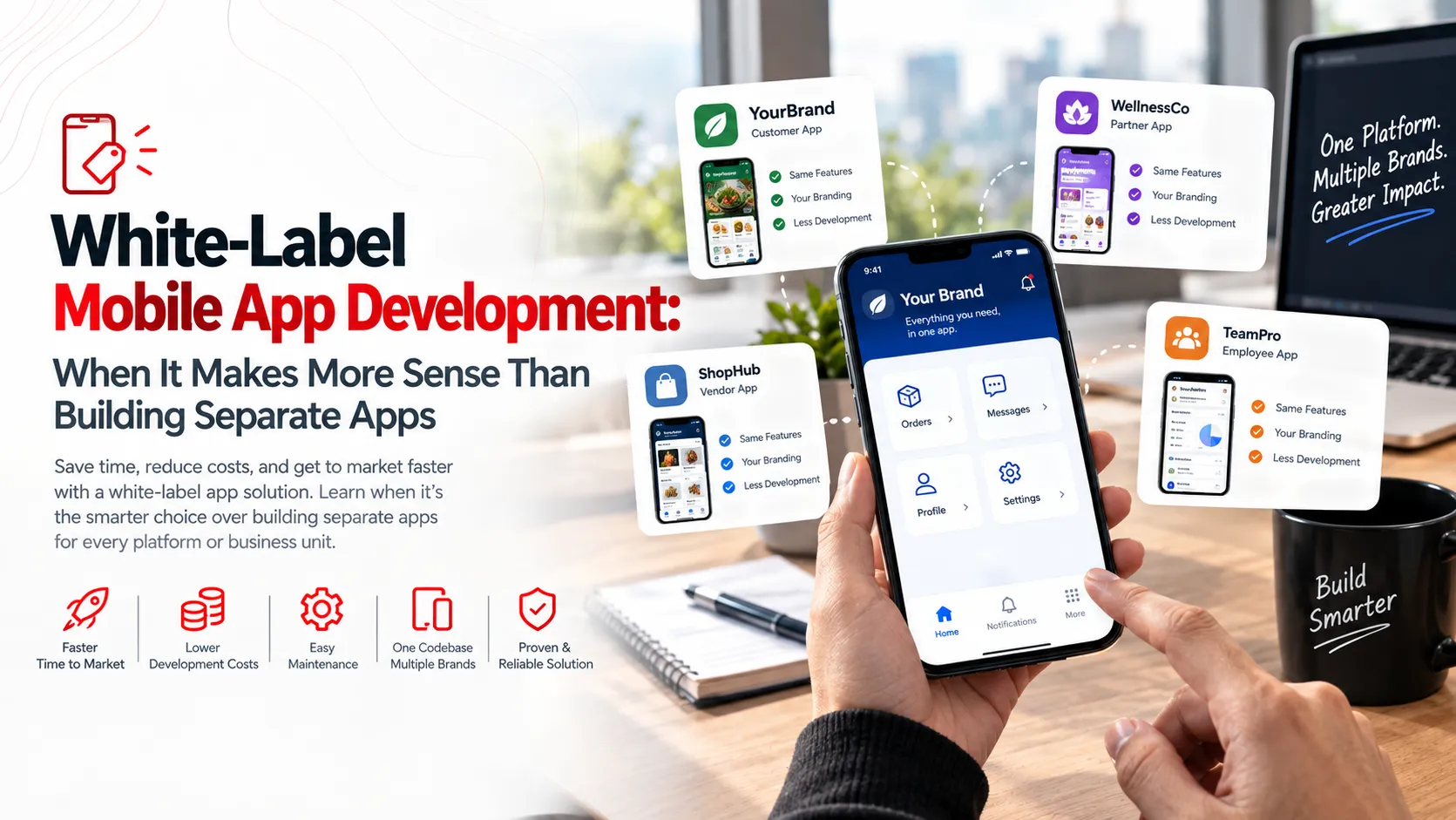
In the competitive world of mobile apps, businesses have a choice between developing custom apps and opting for white-label solutions. White-label mobile app development offers a template-based approach, allowing companies to launch apps quickly and efficiently. This strategy often works for firms seeking cost-effectiveness without significantly compromising on customization capabilities.
White-label apps provide a proven framework that can be rebranded and tailored to specific needs. They are particularly suitable for businesses in need of a reliable app solution with a fast turnaround. Understanding when and how to use white-label development can offer significant strategic advantages to companies, especially those navigating tight budgets and timelines.

Understanding White-Label Mobile Apps

White-label mobile apps are essentially pre-built applications that can be customized and branded for multiple businesses. They serve as a foundation, allowing companies to tailor the design and some functionality to fit their specific needs. This model is popular among businesses that want to quickly deploy an app without building from scratch.
These apps usually come with core features already developed, such as user authentication, product catalogs, and payment gateways. The business adopting the app can add its branding elements, modify colors, and make minor adjustments to the UI. The key advantage is the ability to expedite development processes, saving both time and investment.
When Does White-Label Development Make Sense?
White-label development is particularly beneficial for startups or small businesses that need to enter the market swiftly without a hefty price tag. It's ideal for those in industries where app features are standard, but branding is essential for differentiation. Industries like food delivery, real estate, and e-commerce can benefit significantly from white-label solutions.
This approach is also useful for companies looking to test new markets or deploy pilot programs where the risk of investing in full-scale development doesn't justify the potential reward. Choosing a white-label solution allows businesses to evaluate market response while keeping development costs manageable.
- Pilot Programs: Test market response without high development costs.
- Standard Features: Industries with common features benefit from existing frameworks.
- Branding Needs: Quickly adapt and customize the app to reflect brand identity.
Cost Comparison: White-Label vs Custom Development
| Aspect | White-Label | Custom Development |
|---|---|---|
| Initial Cost | Lower | Higher |
| Time to Market | Faster | Slower |
| Customization | Limited | Extensive |
| Maintenance | Shared | Dedicated |
White-label development typically reduces initial costs, with prices often ranging from $5k to $30k. Custom development starts at a higher bracket, averaging between $40k and $250k depending on complexity. These figures highlight the financial advantages of white-label solutions, especially for businesses prioritizing budget constraints.
Speed to Market: The White-Label Advantage
White-label apps offer a significant speed advantage. Since the core components are pre-developed, businesses can deploy apps in a matter of weeks rather than months. This is particularly beneficial for companies facing competitive pressure or those responding to rapid market trends.
This rapid deployment not only benefits market entry but also allows businesses to iterate quickly. Feedback can be gathered sooner, enabling rapid updates and adaptations to meet user needs. This flexibility often makes a substantial difference in dynamic sectors such as e-commerce and fintech.
Customization Limits of White-Label Apps

While white-label solutions offer the benefit of rapid deployment, they do have customization constraints. The core architecture is usually fixed, allowing only surface-level modifications. Businesses can tweak the design, branding, and perhaps some functionality, but they can't change the fundamental features without significant development work.
These limitations mean that while you can achieve a unique look and feel, white-label apps might not support extensive custom workflows or integrations without additional cost. It's crucial to assess whether these constraints align with your long-term business objectives before settling on a white-label approach.
Quality Considerations for White-Label Products
Quality in white-label apps often depends on the provider's expertise and the underlying technology stack. High-quality developers focus on performance, security, and user experience to ensure a solid product. However, the shared nature of white-label solutions can sometimes mean less control over certain quality aspects compared to custom apps.
Choosing a reputable provider with a strong track record in cross-platform app development ensures you receive a reliable product. It's vital to evaluate the history of white-label deployments and customer testimonials to ascertain the level of quality you can expect.
Market Examples of Successful White-Label Apps
- Food Delivery: Apps powered by white-label solutions like GloriaFood.
- Real Estate: Platforms such as IDX broker apps utilizing white-label frameworks.
- E-commerce: White-label platforms like Shopify for online stores.
- Fitness: Gym management apps using white-label solutions for integration and scheduling.
These examples illustrate how white-label apps have been successful across various industries. By leveraging existing frameworks, businesses have been able to offer tailored, rebranded experiences that meet specific market needs. This strategy provides the dual benefit of a quick launch and reduced risk, contributing to their widespread adoption.
Integration and Support: What to Expect
When opting for a white-label mobile app, integration capabilities and support are crucial. Most white-label solutions offer APIs and plugins that facilitate seamless integration with existing systems. Whether you're using Shopify for e-commerce or Stripe for payments, these integrations are designed to simplify the process. However, you should assess if the white-label provider aligns with your current tech stack.
Support services vary across providers. Some offer 24/7 customer support, while others may have limited availability. In evaluating options, consider the level of support required during initial setup and ongoing maintenance. Does the provider offer SLA guarantees? Knowing this can influence both the performance and reliability of your app.
| Provider | Integration Ease | Support Availability | SLA Options |
|---|---|---|---|
| Provider A | High | 24/7 | Yes |
| Provider B | Moderate | Business Hours | No |
| Provider C | Low | Limited | Yes |
Security Concerns with White-Label Solutions
Security is a top concern when deploying any digital solution, and white-label apps are no exception. While most providers follow standard security protocols, it's vital to conduct your own due diligence. Check if the provider complies with regulations such as GDPR or CCPA and assess any past vulnerabilities. Reviewing security certifications or third-party audits can provide additional assurance.
Consider encryption standards for data at rest and in transit to ensure sensitive information remains secure. Often, security layers can be customized, so engage with providers early to discuss custom security needs. Identifying potential security gaps at the beginning can save you from costly breaches later.
It's crucial to evaluate the security measures and certifications of any white-label provider.
— Brandrums Editorial
Branding in White-Label Apps: Possible or Not?
White-label solutions offer varying levels of branding flexibility. Basic options include logo placement and color scheme customization. More advanced solutions may allow for custom layouts and feature sets that align with your brand identity. Before committing, examine how branding capabilities fit your overall marketing and branding strategy.
Also, engage with the provider to understand how often branding can be updated. Does it allow for seasonal themes or promotional branding changes? Evaluate these factors to ensure that the app remains in harmony with your evolving brand strategy.
Choosing the Right White-Label Provider
Evaluate: the integration possibilities and technological compatibility with your existing systems.
Assess: the customization options for branding and features.
Check: the security credentials and regulatory compliance status.
Review: customer support offerings and SLA terms.
Seek: customer testimonials and case studies to understand the provider’s reputation.
These criteria will help in selecting a provider that aligns with your business needs. Prioritize what matters most to your project, whether it's technological compatibility or branding flexibility, for a successful deployment.
Key Takeaways on White-Label Development
Understanding the potential and limits of white-label solutions can empower you to make an informed decision. By prioritizing core elements like integration, security, and branding, you can ensure a successful app launch.
Brandrums' Approach to White-Label Development
At Brandrums, we leverage our expertise in Mobile Application and Cross Platform App Development to create value-driven white-label solutions. Our approach begins with a thorough needs analysis to ensure alignment with your strategic goals. This is followed by a detailed design phase where custom branding elements are seamlessly integrated into the app.
We offer comprehensive support throughout the lifecycle of the application, from initial setup to ongoing maintenance. With a focus on both security and performance, our white-label apps are designed to be both robust and flexible, adapting to changing business needs. Explore our enterprise-level solutions to learn more about our tailored approach.
What to Do Next with Your Mobile App Idea
If you're considering a white-label solution, start by identifying your business requirements and evaluating potential providers. A detailed comparison of the trade-offs between white-label and custom development is invaluable. Make a decision matrix to evaluate factors like speed, customization, and long-term viability.
Engage with experienced professionals for a consultation on what fits your specific needs. At Brandrums, we offer insights and services ranging from MVP Development to App Design And Development to help you choose the path that maximizes value. Connect with us today to discuss how we can assist in bringing your mobile app vision to life.
Frequently Asked Questions
Is white-label mobile app development cheaper than custom development?
Yes, white-label development is generally cheaper than custom development. This approach typically costs between 40% to 60% less. It reuses existing frameworks, reducing time and labor. However, be mindful that customization options might be limited compared to a fully custom-built app.
Can I customize a white-label mobile app to fit my brand?
You can customize a white-label app, but options are limited. Basic branding elements like logos, colors, and fonts are often customizable. For extensive changes, such as unique features, custom development is better. Evaluate if the current features align with your brand's needs before deciding.
How fast can I launch a white-label mobile app?
White-label apps can often be launched within weeks. Existing frameworks minimize development time, unlike custom apps that may take months. However, the speed might vary based on how much customization you require. Always verify timelines with potential providers to manage expectations.
Are white-label mobile apps secure?
White-label apps can be secure, but it's crucial to verify the provider's security protocols. Ask about data encryption, security audits, and compliance with regulations like GDPR. Always ensure the provider maintains regular updates and patches. It's a shared responsibility to maintain app security.
Who should consider white-label mobile app development?
Businesses seeking rapid deployment and lower costs should consider white-label development. It's ideal for startups, franchises, or companies with limited budgets. If your priority is customization or unique functionality, custom development might be more appropriate.
Will a white-label app integrate with my existing systems?
White-label apps often support common integrations like APIs for CRM or payment systems. However, check compatibility with your existing infrastructure. Some customized integrations might not be feasible. Discuss specific needs with the provider to ensure seamless operation with your systems.
Tags
About the Author

Daniel Brooks
Daniel covers web development, artificial intelligence, product design, and the technology decisions that help modern businesses grow.