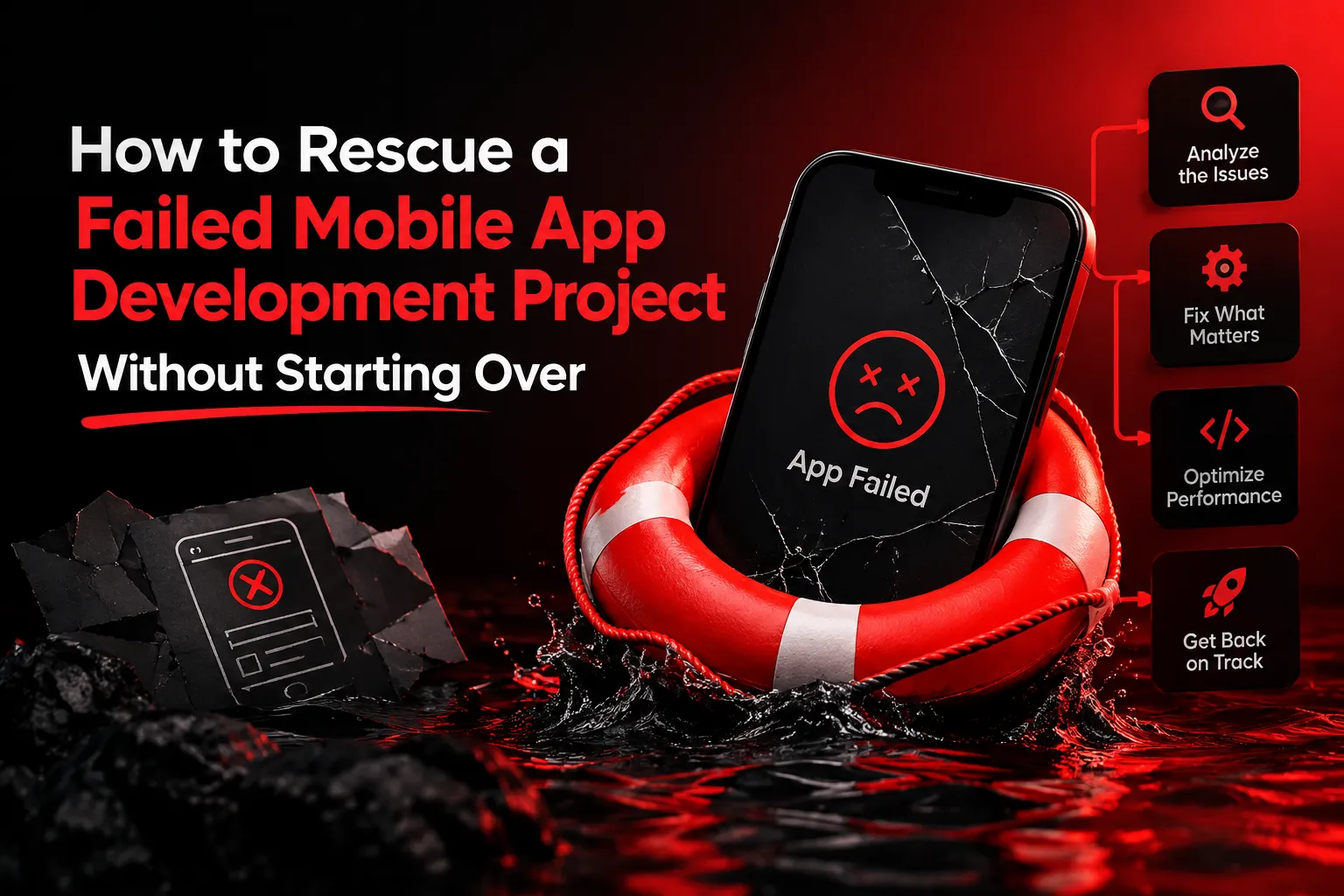
Rescuing a failed mobile app project doesn't always mean starting from scratch. Before you toss your current work aside, it's worth examining the existing assets and uncovering potential opportunities for a turnaround. The right strategies, combined with the right tools, can transform a faltering project into a successful one.
To succeed, you'll need to diagnose the root problems, assess the existing codebase, and involve stakeholders in reshaping the journey. By optimizing development processes and leveraging cutting-edge technologies, you can breathe new life into a stagnant mobile app project. Let's explore these strategies step-by-step.

Identify the Root Causes of Failure

The first step in rescuing a failed mobile app project is understanding why it failed. Common causes include unclear goals, mismatched technology, lack of stakeholder engagement, and inadequate testing. Each factor plays a role in the overall project outcome and needs careful analysis.
Conducting a thorough evaluation of project documentation, team feedback, and user reviews can reveal these issues. Look for patterns, such as consistent user complaints or repetitive technical glitches, to pinpoint specific pain areas. Addressing the root causes lays the groundwork for a successful turnaround.
Assess the Current Codebase
Once you've identified the root causes, the next step is to audit your existing codebase. Understanding the code's quality and structure will help you decide what's salvageable. Tools like SonarQube and CodeClimate can automate the analysis and provide insights into code complexity and technical debt.
A codebase evaluation can reveal reusable components and highlight areas needing refactoring. Look for modules that are well-documented and standardized. These components can serve as the foundation of your revitalized app without redundant development effort.
- Code Quality: Evaluate coding standards and documentation.
- Modular Architecture: Identify reusable components and services.
- Technical Debt: Recognize high-maintenance areas needing refactoring.
Determine If a Pivot Is Necessary
At this stage, consider whether a strategic pivot is needed. A pivot might involve altering the app's target audience, changing key functionalities, or shifting the business model. A pivot can revitalize the project, making it more relevant to market demands.
Factors like market trends, competition, and user feedback guide these decisions. Using tools like Google Analytics and Hotjar, analyze visitor behavior and engagement metrics. This data can highlight what aspects of the app require alignment with user expectations.
| Pivot Option | When to Consider | Tools/Methods |
|---|---|---|
| Target Audience Shift | Mismatch with demographics | Surveys, Analytics |
| Feature Redesign | Low user engagement | Feedback, A/B Testing |
| Business Model Change | Revenue inconsistencies | Market Research |
Engage Stakeholders for Collaborative Solutions
Open communication with stakeholders can provide valuable insights and facilitate collaboration. Engaging them in brainstorming sessions allows for diverse perspectives that lead to innovative solutions. Ensure everyone has access to the same data and aligns with the project's revitalized goals.
Flexibility, transparency, and shared responsibility are pivotal here. Use platforms like Slack and Microsoft Teams to maintain ongoing communication. These tools not only enable discussion but also document decisions and creative ideas, keeping everyone in the loop on the project's progress.
Optimize Development Processes

Inefficient development workflows can be a major bottleneck in app projects. Streamlining processes improves both speed and quality. Consider adopting agile methodologies like Scrum or Kanban to enhance productivity. These frameworks facilitate better communication, quick adaptation to changes, and prioritized backlog management.
Implement continuous integration/continuous deployment (CI/CD) pipelines to ensure regular testing and deployment. Using tools like Jenkins or CircleCI, automate repetitive processes, allowing your team to focus on more strategic contributions. These improvements can drastically reduce time-to-market for your app.
Leverage Cross-Platform Technologies
Cross-platform technologies, such as React Native, offer a viable solution for rescuing struggling mobile app projects. By building a single codebase that runs across iOS and Android, you can save time and resources. This approach reduces development effort, making it ideal for budget constraints or tight timelines.
Selecting the right technology requires assessing the existing architecture and future needs. React Native and Flutter both provide a consistent cross-platform experience with native-like performance. Evaluate your requirements and choose the platform aligning best with your goals.
- React Native: Great for apps with heavy dynamic updates.
- Flutter: Ideal for expressive UI designs.
- Xamarin: Suitable for enterprise-grade solutions.
Utilize AI for Testing and Optimization
AI tools can significantly enhance testing and optimization processes. Platforms like Applitools and Testim use machine learning to detect UI anomalies, identify bugs, and optimize performance. By automating repetitive tests, AI allows developers to focus on refining core functionalities.
In addition to testing, AI can aid in optimizing user experience. Tools like Optimizely personalize user interactions by analyzing behavior and preferences. Implementing machine learning algorithms can increase engagement and retention, further amplifying the app's revitalized appeal.
Budget Reallocation Strategies
Budget reallocation is essential when a mobile app project is on shaky ground. Instead of throwing more money at the problem, it’s vital to shift funds towards activities that bring the most value. Start by identifying underperforming areas and divert resources to high-impact segments, like features that resonate with user needs or fixing critical bugs.
Consider employing cost-effective technologies such as Firebase for backend services instead of building custom solutions. According to industry data, typical US agency rates for backend development could range from $15k to $40k. By reevaluating these areas, your budget becomes an ally rather than a constraint, enabling more precise investments.
Implement Continuous Feedback Loops
Integrating continuous feedback loops into your mobile app development process can dramatically increase project adaptability. Regular feedback allows for immediate adjustments, improving both the quality and relevance of your app. Utilize tools like UserTesting or Lookback to gather user insights efficiently.
Feedback loops are not just about external users. Internal teams benefit from agile methods such as Scrum or Kanban, fostering an environment where developers can quickly iterate on user feedback. This dynamic process ensures the app’s features align with market needs and business goals.
Automated Surveys: tools like Typeform for real-time user input
User Interviews: conducted at regular intervals
Performance Metrics: track app usage and crash logs
Iterate with an MVP Approach
Using a Minimum Viable Product (MVP) approach may help rescue a faltering project by focusing on essential features. The MVP strategy trims waste and focuses on quickly launching to gather user feedback. This approach allows teams to prioritize core functionalities and defer additional features for later iterations.
A strong MVP can be developed using tools like React Native, which can save time and resources by deploying across iOS and Android using a single codebase. This streamlined development process supports faster iterations, aligning product improvements directly with user wants and needs.
Hands-On with Effective Project Management Tools
Proper project management tools are fundamental in streamlining a troubled mobile app project. Platforms like Jira, Asana, and Trello can centralize tasks, facilitate communication, and ensure everyone is aligned. These tools help keep a project on track by providing visibility into development cycles and task progress.
Implementation of these tools should be tailored to the project's specific needs. For instance, Jira is great for extensive, feature-rich apps due to its detailed tracking capabilities, while Trello can be ideal for smaller teams requiring a more visual task management approach.
| Tool | Best For | Price Range | Key Features |
|---|---|---|---|
| Jira | Large Projects | Starting $10/user | Detailed Tracking |
| Asana | Medium Projects | Free to $24.99/user | Custom Workflows |
| Trello | Small Teams | Free to $12.50/user | Visual Boards |
| Monday.com | Collaboration | Starting $8/user | Multiple Views |
Successful Case Studies of Project Turnarounds
There are numerous examples of mobile app projects revived without starting over. Consider the case of Instagram, initially launched as Burbn. By focusing on what users lovedsimple photo sharingInstagram pivoted their strategy and succeeded. Another example is Twitch, which pivoted from a general live streaming platform to focus on gaming.
These successful pivots highlight the importance of focusing on user needs and leveraging existing strengths. Identifying what works and iterating strategically can breathe new life into struggling projects, offering renewed potential for success.
How Brandrums Approaches Project Salvages
At Brandrums, our approach to rescuing mobile app projects involves a thorough assessment and a structured action plan. We focus on leveraging existing assets and aligning the project with current market needs. This often includes technology shifts, such as adopting cross-platform solutions like Flutter or React Native, to streamline development.
Our team prioritizes stakeholder collaboration, ensuring all voices are heard in reshaping project goals. We employ continuous user feedback to guide iterative development, retaining a focus on creating functional, compelling apps that meet user expectations and business objectives.
Planning for Future Success
Preventing future project failures requires diligent planning and anticipation of potential pitfalls. Establish clear objectives and maintain flexibility to adapt to changing market conditions. It’s crucial to create a culture of innovation and timely responsiveness within your team, embracing iterative methodologies and robust testing practices.
Invest in continuous learning and development, ensuring your team is equipped with the latest skills and knowledge. This not only enhances project execution but also fosters an environment where challenges are viewed as opportunities for growth and improvement.
Frequently Asked Questions
How do you know if it's worth rescuing a failed app project?
Evaluating the potential ROI is key. If the app addresses a significant user need and has valuable features, it's worth saving. Assess user feedback and market demand. If minor changes can lead to success, rescue may be feasible.
Is it cheaper to fix a failed app rather than start anew?
Fixing an app can be cheaper if core functionalities are solid. Minor tweaks often cost less than rebuilding. Evaluate code quality and market relevance. Major structural issues might make starting fresh more cost-effective.
What tools can help in optimizing a failed app project?
Tools like JIRA and Trello streamline project management, while tools like Firebase optimize performance. For code efficiency, try SonarQube. Identifying the right tools can align your team and improve development efficiency. Choose according to your project's scope and needs.
Do I need to switch platforms if my app is failing?
Switching platforms might be necessary if user demographics or market trends don't align. Cross-platform tools like React Native offer flexibility. Evaluate performance across platforms before deciding. Sometimes, optimizing for the current platform is enough.
How important is stakeholder engagement in rescuing an app?
Stakeholder engagement is crucial for aligning goals and resources. Open channels improve decision-making and accountability. Stakeholders can offer valuable insights and support. Regular updates and collaboration help in crafting practical solutions during rescue operations.
Can AI help in diagnosing app issues effectively?
AI can efficiently identify recurring problems and optimize testing processes. Tools like Appium can automate testing, reducing manual effort. AI-driven insights help improve performance. Implementing AI solutions can save time and enhance the app quality across updates.
Tags
About the Author

Daniel Brooks
Daniel covers web development, artificial intelligence, product design, and the technology decisions that help modern businesses grow.