
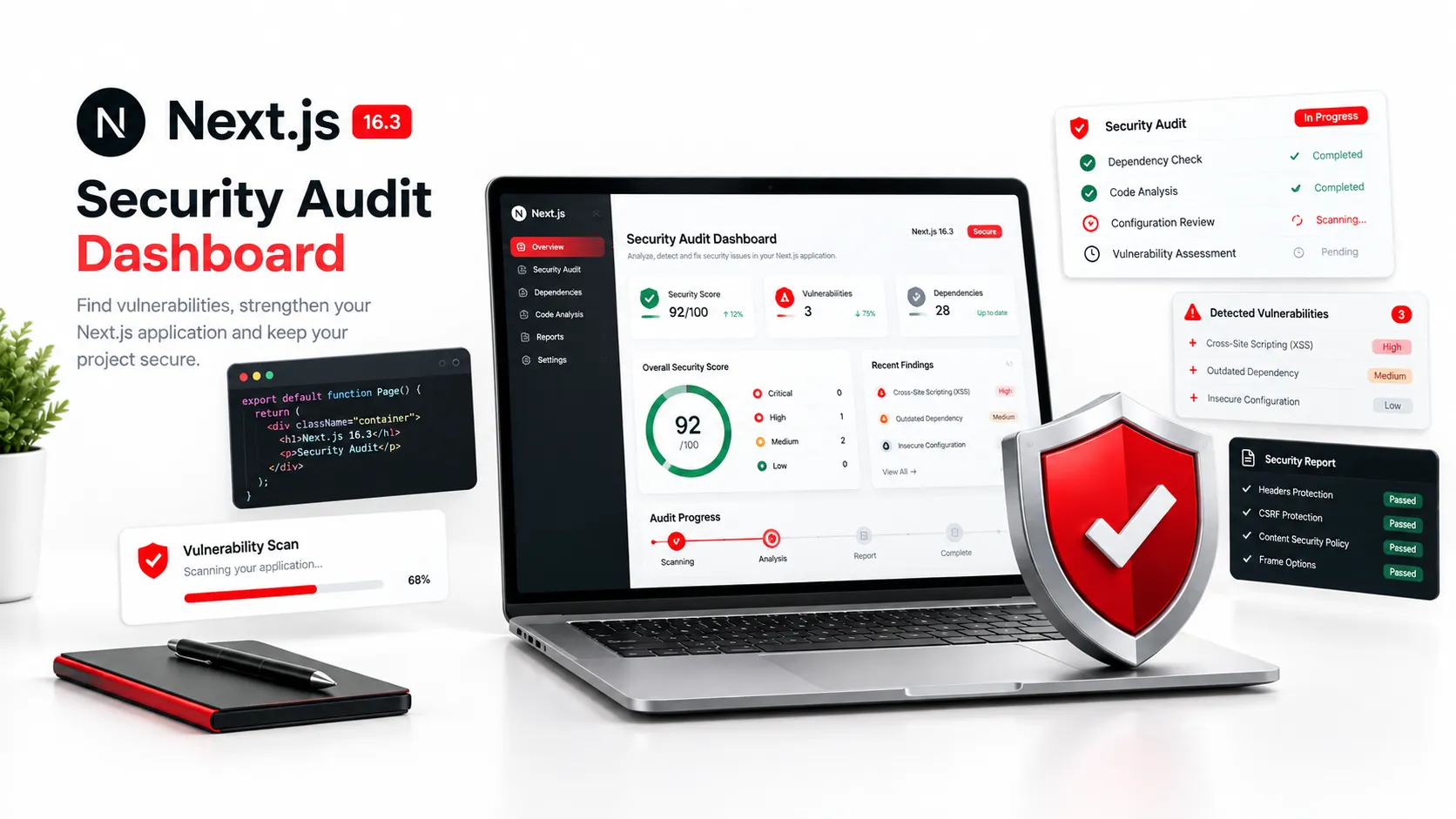
Next.js 16.3 brings a host of new security features designed to protect business websites. With cyber threats growing every day, it's crucial to understand what this new version offers. For those responsible for a company’s digital presence, knowing when and why to upgrade can be critical to maintaining security and performance.
Not every business needs to jump on the latest update immediately, but a security audit could reveal vulnerabilities that could cripple a website. We’ll explore the core security features introduced in Next.js 16.3, outline common security challenges, and provide guidance on assessing whether your business website needs an upgrade now.

Understanding Next.js 16.3 Security Features

Next.js 16.3 adds a range of security enhancements, focusing on data protection and user authentication protocols. Features such as automatic security patching and improved cross-site scripting prevention help to fortify applications against common threats. These changes are designed to offer robust security while maintaining the flexibility developers love in Next.js.
Enhanced logging capabilities in 16.3 bolster anomaly detection and facilitate quicker incident responses. With data protection laws becoming increasingly stringent, these improvements can help businesses meet compliance requirements and protect client information better.
Why Security Audits Are Crucial for Your Business
Security audits play a vital role in safeguarding your business website. They help in identifying weak points, ensuring compliance, and protecting sensitive information from cyber threats. Without regular audits, businesses risk potential financial loss, reputational damage, and legal consequences.
Audits offer clear insights into the current state of your website’s security and provide recommendations for necessary improvements. When performed systematically, they can prevent costly breaches and enhance overall cybersecurity posture.
- Identify vulnerabilities: such as outdated software or misconfigurations.
- Ensure compliance: with regulations like GDPR and CCPA.
- Protect brand reputation: by preventing publicized security breaches.
- Improve data security: by safeguarding customer information.
Key Differences Between Next.js 16.2 and 16.3
Understanding the differences between Next.js 16.2 and 16.3 helps in making informed upgrade decisions. The newer version brings in advanced security mechanisms that were not present in 16.2, such as enhanced content security policies and more robust HTTP headers.
While 16.2 was pivotal for performance upgrades, 16.3 shifts focus to security, allowing developers to secure their apps better without sacrificing speed. It is particularly crucial for e-commerce platforms handling sensitive transaction data.
| Feature | 16.2 | 16.3 |
|---|---|---|
| Security Patching | Manual | Automatic |
| Logging | Basic | Enhanced |
| Content Security Policy | Standard | Advanced |
| Cross-Site Scripting | Basic Prevention | Improved Prevention |
Common Vulnerabilities in Business Websites
Business websites often face vulnerabilities such as SQL injection, cross-site scripting, and insecure direct object references. These issues can result in data breaches, financial loss, and damage to brand reputation. Even with advanced frameworks like Next.js, proper configuration and regular checks are necessary.
Identifying and addressing these vulnerabilities early is crucial. It reduces the risk of exploitation and ensures that your business remains compliant with data protection standards. Regular updates and code reviews are essential practices in maintaining security integrity.
- SQL Injection: can compromise databases and extract sensitive information.
- Cross-Site Scripting: enables attackers to execute malicious scripts in the user's browser.
- Insecure Direct Object References: pose risks by exposing internal object information.
- Insufficient Logging: hampers intrusion detection and response.
How to Conduct a Security Audit for Next.js

Conducting a comprehensive security audit on a Next.js application involves multiple steps. Start by updating all dependencies to ensure there are no known vulnerabilities in the software stack. Use tools like npm audit to automate this process.
Next, assess your codebase for common vulnerabilities using static analysis tools. Finally, conduct penetration testing to simulate real-world attack scenarios. Regularly scheduled audits ensure that new vulnerabilities are identified and resolved, offering continuous security improvement.
Tools to Enhance Next.js Security
Several tools are available to enhance the security of your Next.js applications. They provide developers with easy ways to implement best practices and address common vulnerabilities. From dependency checks to advanced security headers, these tools streamline the security enhancement process.
Efficient security tools can significantly reduce manual effort and increase accuracy in identifying potential risks. Understanding which tools complement your existing workflows will maximize their effectiveness and ensure your application remains secure.
- npm audit: for automated vulnerability checks in dependencies.
- Snyk: to continuously monitor project dependencies and reports.
- Helmet: to secure HTTP headers and safeguard user interactions.
- ESLint: for identifying and fixing problematic patterns in code.
When Should You Upgrade to Next.js 16.3?
Deciding when to upgrade to Next.js 16.3 should be based on several criteria, including current security posture, compliance needs, and the potential impact on ongoing development projects. If your website is vulnerable or experiences frequent security issues, upgrading should be prioritized.
For businesses with stringent compliance requirements or handling sensitive data, immediate upgrades may be necessary. Otherwise, planning an upgrade when new features align with business objectives can be an effective strategy. Regular assessments will help determine the right timeline for upgrading.
| Criteria | Upgrade Now? | Wait |
|---|---|---|
| Current vulnerabilities | Yes | No |
| Development resources available | Yes | No |
| Compliance deadlines | Yes | No |
| Feature relevance | Yes | No |
Market Costs for Security Audits
Security audits vary widely in cost depending on the scope and complexity of your website. For a medium-sized business website, typical US agency rates range from $5,000 to $20,000. This covers vulnerability assessments, penetration testing, and comprehensive reporting. Smaller projects might cost less, while highly complex sites with more features could exceed these estimates.
It’s crucial to choose a service provider with a proven track record. Look for firms offering tailored services that match your business needs, ensuring a thorough audit without unnecessary expenses. Investing in a reputable provider can prevent costly breaches and save money in the long run. Understanding these market costs is essential for budgeting and planning.
Comparing Security Levels: Next.js vs Alternatives
Next.js 16.3 offers robust security features, but it's vital to compare these with other frameworks like React Native, Gatsby, and Angular. Each has strengths, yet variations in performance and security can impact your choice. For example, Next.js excels in server-side security and automatic static optimization, which are advantages for enterprise-level applications.
Conversely, frameworks like Gatsby provide speed and simplicity, which may suit smaller projects with less sensitive data. Angular's detailed security documentation and built-in security features make it appealing for developers familiar with TypeScript. Weighing these factors can help you decide which framework aligns with your security requirements.
| Framework | Security Focus | Ideal Project Type |
|---|---|---|
| Next.js | Server-side security | Enterprise |
| React Native | Cross-platform apps | Mobile |
| Gatsby | Static site generation | Content focused |
| Angular | Comprehensive documentation | Complex apps |
| WordPress | Plugin security | Content management |
Case Study Insights: Security Overhaul
A prominent ecommerce company faced escalating threats post-pandemic. Their decision to upgrade to Next.js 16.3 involved a comprehensive security overhaul. By conducting an in-depth security audit, they identified critical vulnerabilities in their checkout and data management systems, leading to targeted improvement actions. This shift reduced breach risks and improved customer trust.
The project integrated proactive solutions including automated threat detection and encryption enhancements. No security initiative is complete without strategic planning, periodic audits, and a responsive incident management team. These elements transformed the company's security posture, protecting sensitive customer data and business assets.
Key Actions: Performed regular security audits, enhancing encryption protocols.
Outcomes: Minimized threat exposure and boosted customer confidence.
Lessons Learned: Importance of continual assessment and updates to security practices.
The Role of AI in Web Security Audit
Artificial intelligence has revolutionized web security audits by automating threat detection and reducing response times. AI tools can analyze vast amounts of data in real time, identifying patterns indicative of potential breaches. This capability is crucial in environments processing sensitive customer information, enabling companies to act swiftly.
Integrating AI into audits provides comprehensive insights through predictive analysis, helping to foresee and prevent future vulnerabilities. Utilizing machine learning models ensures adaptive measures to evolving threats, making AI a game changer in maintaining robust security protocols for any business.
Automated Threat Detection: Quickly identifies and addresses vulnerabilities.
Predictive Analysis: Foresees potential security breaches.
Adaptive Security Measures: Evolves with emerging threats for ongoing protection.
Real-World Examples of Security Breaches
Cases like the Equifax breach serve as stark reminders of the repercussions of neglected security. Inadequate encryption and delayed patch updates can lead to significant data leaks, affecting millions and damaging trust. It's an example of how outdated systems and poor security practices can expose vulnerabilities.
Another notable example is the Marriott breach, resulting from unpatched data systems and insufficient security audits. The lesson here is clear: Regularly updating security protocols and maintaining vigilance against known vulnerabilities is non-negotiable. These breaches underscore the importance of proactive security management.
Brandrums Approach to Next.js Security
At Brandrums, ensuring the security of our Next.js projects starts with a rigorous audit process. Our team conducts thorough assessments to identify potential weaknesses, followed by tailored security enhancements adapted to each client’s specific environment. Ongoing monitoring and regular updates form the backbone of our strategy.
We strive to maintain the highest standards by leveraging state-of-the-art tools and techniques. Our end-to-end security process not only protects client data but also ensures the integrity of their business operations. Focusing on Next.js’s unique strengths, we provide security solutions that are both reliable and efficient.
Planning Your Next.js Security Strategy
Developing an effective Next.js security strategy requires a clear understanding of business needs and potential threats. Start with a detailed security assessment, which includes reviewing existing protocols and identifying areas for enhancement. Tailor strategies to fit your specific circumstances, considering both technical requirements and organizational goals.
As you implement security measures, keep in mind the importance of regular audits and updates. They'll ensure your systems remain resilient to new threats. Collaborating with security specialists can provide the support needed to design and maintain a robust security framework tailored to your Next.js applications.
Frequently Asked Questions
Is Next.js 16.3 more secure than the previous version?
Yes, Next.js 16.3 introduces enhanced security features. These improvements address vulnerabilities found in 16.2. The update includes better default security settings and supports modern authentication methods. However, proper implementation and security practices remain crucial for optimal protection.
How much does it cost to upgrade to Next.js 16.3?
The cost to upgrade depends on your project's complexity and scope. Simple projects may cost a few hundred dollars for developer time, while more complex sites could run into thousands. Consider the benefits of improved security versus potential vulnerabilities.
Will upgrading to Next.js 16.3 impact website performance?
Upgrading to Next.js 16.3 might improve performance due to optimized code and better resource handling. However, thorough testing is essential to ensure compatibility with existing components. Not all plugins and extensions may work seamlessly after an upgrade.
Do I need a developer to upgrade to Next.js 16.3?
A developer is recommended for upgrading to Next.js 16.3. The process involves code modifications and testing for compatibility issues. If your site is complex, professional guidance ensures a smooth transition and addresses any security concerns.
How frequently should security audits be conducted for a Next.js application?
Conduct security audits at least annually or after significant changes. Regular audits help identify vulnerabilities early and ensure your application remains secure. High-risk industries like finance may require more frequent assessments to mitigate potential threats.
What are the risks of delaying an upgrade to Next.js 16.3?
Delaying an upgrade can expose your website to security vulnerabilities present in older versions. Outdated software increases the risk of cyberattacks and data breaches. Weigh the potential risks against the time and resources needed for an immediate upgrade.
Tags
About the Author

Daniel Brooks
Daniel covers web development, artificial intelligence, product design, and the technology decisions that help modern businesses grow.