Why You Need a Checklist, Not Just Enthusiasm
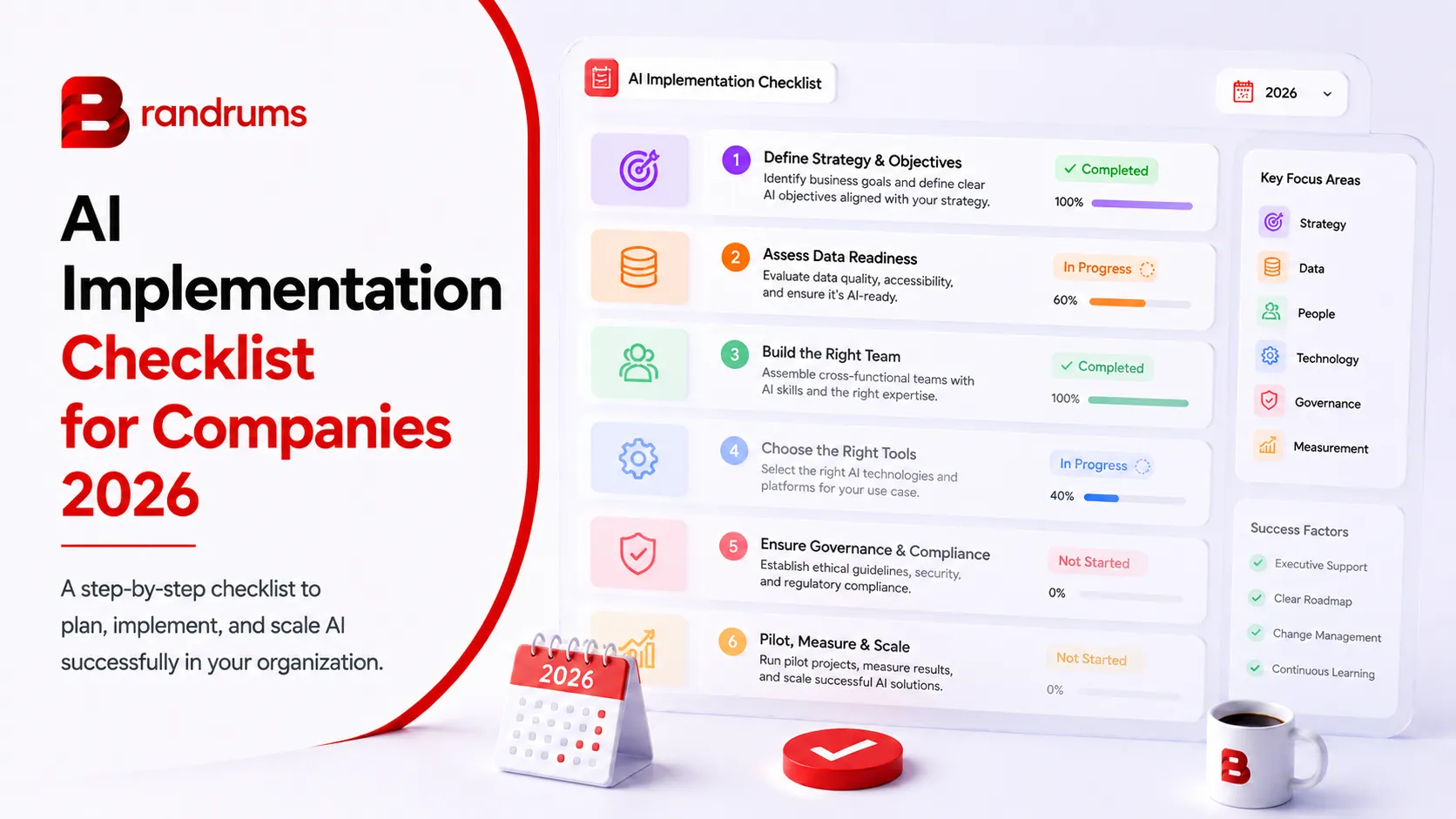
Plenty of companies buy AI tools. Far fewer get value from them. The difference is almost never the tool. It is whether the implementation followed a sane process or whether someone bought a subscription, told the team to "use AI," and hoped. The numbers make the point. While 88 percent of organizations use AI in at least one function, only about 7 percent have fully scaled it. That enormous gap between adopting and succeeding exists because most companies skip the unglamorous implementation steps. This checklist is those steps, in order, so you land in the small group that actually profits.
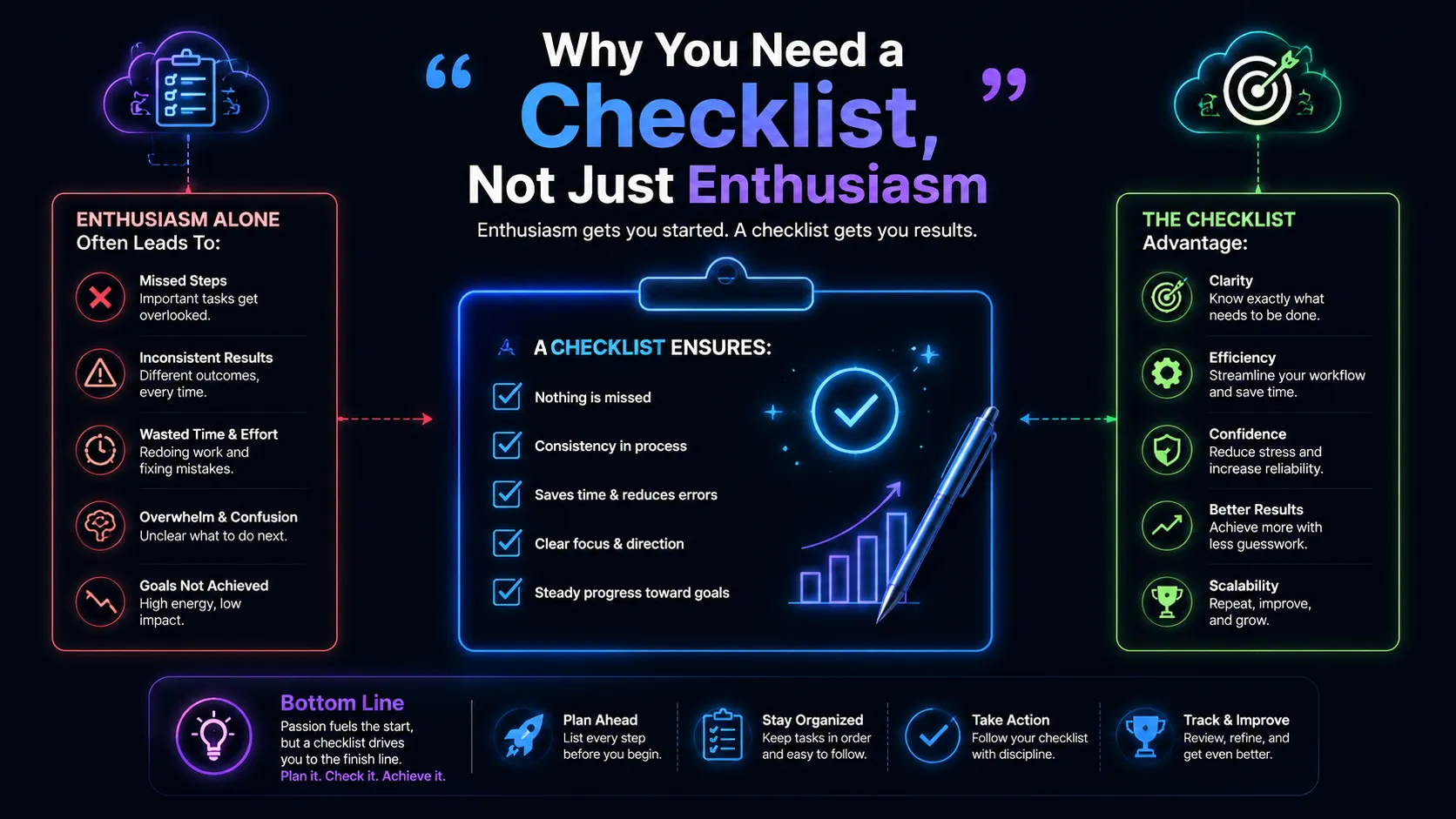
Skip a phase and the whole thing wobbles. This order is the order for a reason. Work through it in sequence. Each phase sets up the next, and skipping ahead is exactly how implementations stall. Treat it as a gated process: do not move to the next phase until the current one is genuinely done.
Phase 1: Assess Before You Buy Anything
The most expensive mistake is buying tools before you know what problem you are solving. Start here, with no purchases.
Assessment checklist
Identify your most repetitive, time-consuming tasks. These are your AI candidates.
Pick one specific process to target first, not the whole company.
Define what success looks like in numbers: hours saved, costs cut, errors reduced.
Set a rough budget, remembering tools are only 20 to 40 percent of true first-year cost.
Check whether an off-the-shelf tool solves it before considering anything custom.
That last point saves companies a fortune. Most business problems are solved with off-the-shelf tools at $20 to $100 per user per month, not custom builds. Assess first, buy second. A clear definition of success here is what lets you prove value later, so do not rush it. One practical tip for this phase: involve the people who actually do the work you are thinking of automating. Leadership often picks an AI target based on what looks impressive, while the team on the ground knows exactly which repetitive task is quietly draining the most hours. Those are frequently not the same task. A short conversation with the people closest to the work will surface better candidates than any top-down guess, and it has the side benefit of bringing them into the process early, which makes the eventual rollout far smoother. The best first use case is usually the one your team complains about most, because the value is obvious and the buy-in is already there.
Phase 2: Prepare Your Data and Your People
This is the phase everyone wants to skip and absolutely should not. AI is only as good as the data you feed it and the people who use it. Skip this and even great tools underperform.
Preparation checklist
Clean up the data the AI will use: messy CRM records, scattered files, outdated info.
Identify who will own the tool and be responsible for results.
Budget training time: 10 to 30 hours per tool for the team to get genuinely fluent.
Set basic guidelines for responsible use, especially anything customer-facing or sensitive.
Prepare your team for a short adjustment period rather than instant magic.
Reality check: data cleanup is the least exciting and most decisive part of an AI rollout. The companies that see 3 to 5 times ROI did this work. The ones that skipped it got worse results from the exact same tools.
Phase 3: Pilot With One Use Case
Do not roll out company-wide on day one. Run a contained pilot so you learn cheaply and prove the value before you commit at scale.
Pilot checklist
Start with one team and one well-defined use case.
Use a free or cheap tier to test before committing to bigger spend.
Run it for a defined window, around 30 days, with real work.
Keep a human reviewing AI output, especially anything customer-facing.
Collect feedback from the people actually using it daily.
A pilot turns "we think this will help" into "we know this saves us six hours a week." That evidence is what makes the next phase, scaling, a confident decision instead of a leap of faith. It also surfaces the practical snags, the integration quirks and workflow frictions, while they are still cheap to fix.
Phase 4: Measure Honestly
This is the step that separates companies getting real ROI from companies with expensive subscriptions. Measure against the success metrics you defined back in Phase 1.
Measurement checklist
Compare results to your Phase 1 targets: did it save the time or money you expected?
Calculate true ROI including setup and training time, not just the subscription.
Ask the team whether it genuinely helped or quietly created new work.
Decide clearly: keep, adjust, or drop. Do not let undecided tools linger.
Document what worked so you can repeat it in the next area.
Be honest here, even when it stings. If a tool did not deliver, killing it is a win, because it frees budget and attention for something that will. The discipline of measuring and cutting is exactly what the high-performing 6 percent do that everyone else does not.
Want This Done Right the First Time?
Most failed AI rollouts skip assessment, data prep, or honest measurement. Brandrums runs the full process so you land in the group that profits, not the group that pays.
See Our AI SolutionsTalk to Us
Phase 5: Scale What Works
Only now, with proof in hand, do you expand. Scaling is where the real returns live, and it is exactly where most companies stall out at that 7 percent ceiling.
Scaling checklist
Roll the proven tool out to more teams or processes.
Move to the next use case from your Phase 1 list.
Connect tools so they work together instead of in silos.
Build AI fluency across the company, not just one specialist.
Review the whole stack quarterly and cut anything idle.
Companies that scale deliberately, one proven use case at a time, are the ones reaching 3 to 5 times ROI within 12 to 18 months. The pattern that works is always the same: pilot, prove, scale, repeat. It is not glamorous, but it is what separates the winners from the dabblers. Scaling is also where connecting your tools starts to pay real dividends. A single AI tool helping one team is useful. The same tool feeding data into your CRM, which triggers an automation, which updates a report the whole company sees, is transformative, because the value compounds across functions instead of staying trapped in one. This is the quiet difference between the 7 percent who have fully scaled and everyone else. They did not necessarily buy better tools. They connected the tools they had into systems, and they kept building AI fluency so that adoption did not depend on a single champion who might leave. Scale is less about adding more software and more about weaving what works into how the whole company operates.
A Realistic Timeline
Here is how the five phases map onto a sane first 90 days, so the checklist feels like a plan rather than a wish list.
Ninety days from "we should do something with AI" to a proven, scalable result.
Window | Phases | Outcome |
|---|---|---|
Days 1-30 | Assess and prepare | A target process, success metrics, clean data, an owner |
Days 31-60 | Pilot | One tool tested on real work with one team |
Days 61-90 | Measure and begin scaling | Proven ROI and a decision to expand or pivot |
The Mistakes This Checklist Prevents
Every item above exists because companies routinely get it wrong. The most common failures are worth naming directly so you can spot them.
Buying before assessing. Tools in search of a problem almost always disappoint.
Skipping data prep. Garbage in, garbage out, no matter how good the tool.
Rolling out company-wide with no pilot. Expensive way to discover a tool does not fit.
Never measuring. Without proof, you cannot tell value from waste, so you keep paying for both.
Stalling after the pilot. The pilot is the start, not the finish. Value lives in scaling.
Avoid those five and you are already ahead of most of the companies spending far more than you. The checklist is not bureaucracy. It is the difference between AI that pays for itself and AI that becomes a line item nobody can justify.
Run Your AI Implementation With a Proven Process
If you would rather not navigate all five phases alone, Brandrums runs the full implementation, from assessment to scaling, so the result actually sticks.
See Our AI SolutionsTalk to Us
Frequently Asked Questions
What are the steps to implement AI in a company?
Follow five phases in order: assess (find the repetitive process to target and define success metrics), prepare (clean data, assign an owner, budget training time), pilot (test one tool with one team for about 30 days), measure (compare results to your targets and calculate true ROI), and scale (expand proven tools and move to the next use case). Skipping phases is why most rollouts stall.
Why do most AI implementations fail?
While 88 percent of organizations use AI, only about 7 percent have fully scaled it. Most fail by buying tools before assessing the need, skipping data preparation, rolling out company-wide with no pilot, never measuring results, or stalling after the pilot instead of scaling. The tool is rarely the problem; the process is.
How long does it take to implement AI?
A realistic timeline is about 90 days for a first use case: days 1 to 30 for assessment and preparation, days 31 to 60 for a pilot with one team, and days 61 to 90 to measure ROI and begin scaling. Full company-wide value comes from repeating this cycle, with structured adopters reaching strong ROI within 12 to 18 months.
How much does it cost to implement AI in a company?
Most companies start with off-the-shelf tools at $20 to $100 per user per month. Remember that the tool subscription is often only 20 to 40 percent of the true first-year cost once you add data cleanup, integration ($500 to $5,000), and 10 to 30 hours of training per tool. Budget for implementation, not just licenses.
Should we pilot AI before rolling it out company-wide?
Yes, always. A contained pilot with one team and one use case lets you prove value cheaply before committing at scale. It turns 'we think this will help' into measured evidence of hours or dollars saved, and surfaces integration and workflow snags while they are still cheap to fix. Company-wide rollout with no pilot is a common, expensive mistake.
Ready to build the AI setup that fits your business?
Whether you are a solo founder testing the waters or a growing team scaling into serious automation, we help clients pick the lightest AI stack that earns its keep. Same discipline we apply through website development, web application development, SaaS development, and digital marketing retainers. Tell us what you are trying to automate and we will recommend a setup. Or check our pricing options if you are scoping engineering support alongside the tooling.
Tags
About the Author

Daniel Brooks
Daniel covers web development, artificial intelligence, product design, and the technology decisions that help modern businesses grow.