How Much Should a Small Business Budget for AI?
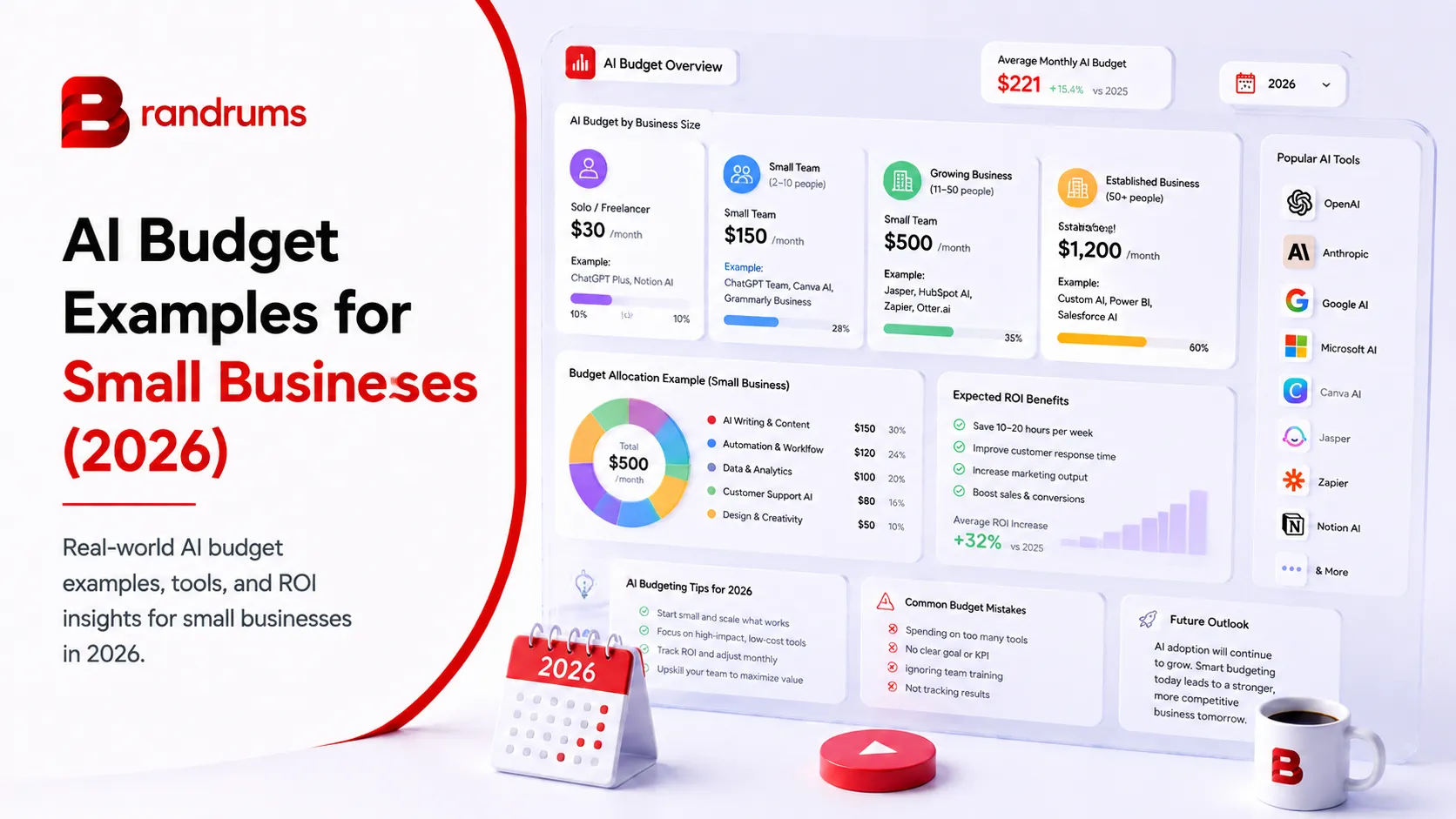
Most small business owners want one thing before they touch AI: a number. Not a think piece about the future of work. A number they can drop into a spreadsheet without feeling like they got talked into something by a salesperson. So here it is, up front. In 2026, small businesses typically spend somewhere between $50 and $500 a month on AI tools. A bare-bones setup runs $30 to $50. A proper growth stack that covers content, sales, support, and automation lands around $200 to $500. That is the whole range most of you will live in for your first year. Everything past that point is either a special case or a custom build, and we will cover both. The rest of this guide shows you exactly what each budget buys, because a number like "$200 a month" means nothing until you can see the tools sitting inside it, the work they replace, and the return they hand back. The sections are ordered the way you would actually grow into AI: start at zero, add a starter stack, scale to a growth stack, and only then think about anything custom.
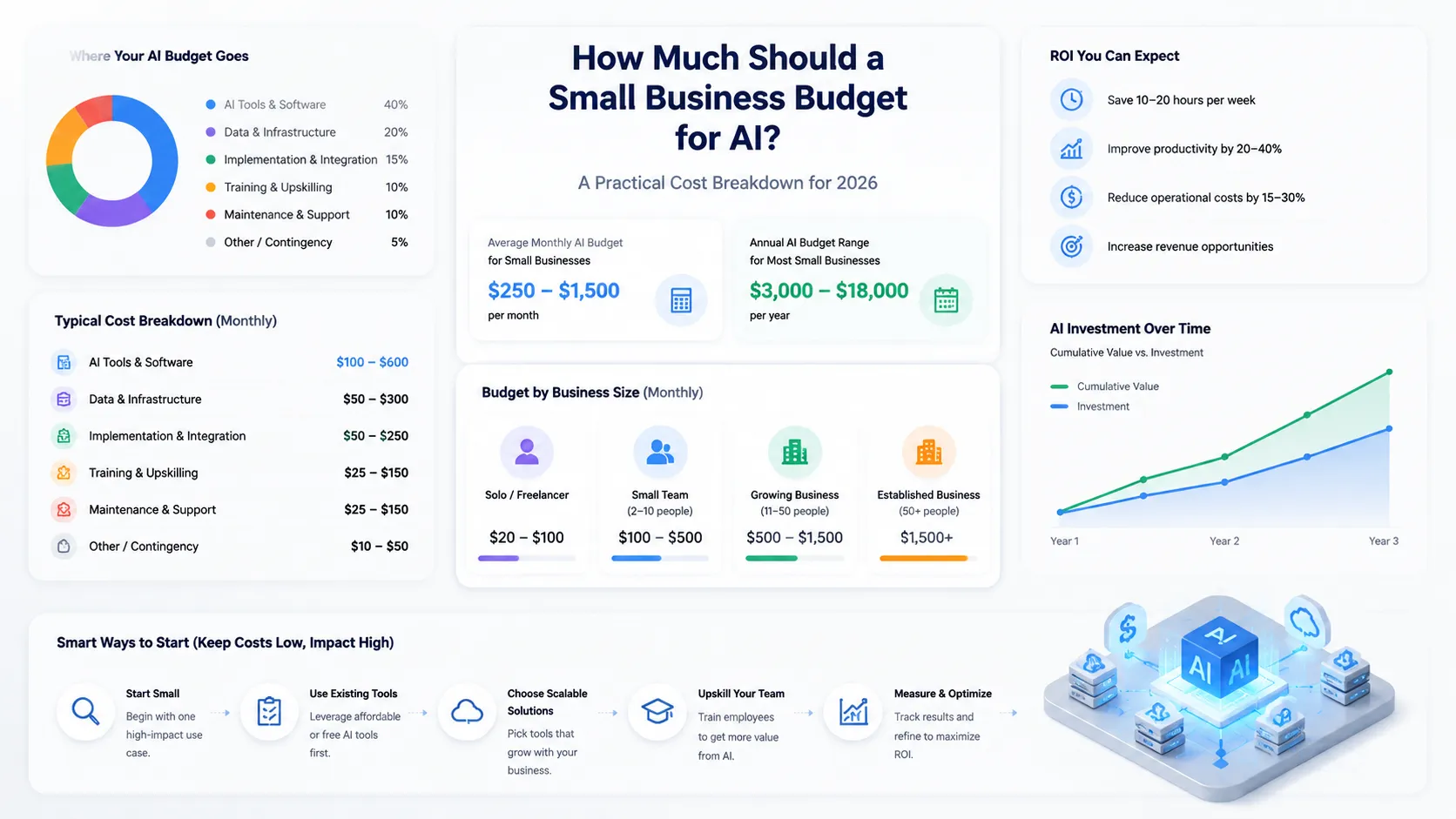
Most small businesses live in the $0 to $500 range. Custom builds are a separate, one-time investment. The quick version: the floor is genuinely $0 thanks to capable free tiers, the comfortable middle is $40 to $500 a month, and custom agency builds are a separate $10,000 to $50,000 one-time investment that most small businesses do not need in year one.
Why AI Budgets Are Smaller Than You Think in 2026
There is a reason these numbers feel low compared to the breathless headlines. Two things happened to AI pricing over the last two years, and both work in your favor. First, prices dropped. Average AI software prices have fallen roughly 15 percent since 2024, mostly because there are now dozens of competitors fighting over your subscription. When ChatGPT, Claude, Gemini, and Perplexity all sit at around $20 a month with similar features, none of them can charge a premium for the basics. Second, the free tiers got good. Really good. The free version of an AI assistant in 2026 is not the sad, crippled demo it used to be. It is a capable tool that handles a surprising amount of real small business work. That changes the entire budgeting conversation, because your floor is now genuinely zero, not "zero but useless." Put those together and you get the cheapest year in history to start with AI. So when a vendor quotes you something that sounds enormous, you have a frame of reference to push back. Most small business problems get solved with off-the-shelf tools for $20 to $100 per user per month, not five-figure projects.
The $0 Budget: Yes, This Is Real Now
Let us start where you should actually start, which is by spending nothing. A solo founder or a small team can run for months on free tools alone, and for a lot of you this will be enough to prove the whole idea before you commit a dollar.
💰 A working free stack
ChatGPT or Claude (free tier) for writing, brainstorming, research, summarizing documents, and answering quick questions.
HubSpot free CRM to track leads and contacts without paying until you outgrow it.
Mailchimp free for email marketing up to 500 contacts.
Google Search Console to understand how people find your website, at no cost.
A free chatbot tier like Tidio to auto-answer the handful of website questions you get each day.
Will you hit limits? Eventually, yes. Free tools cap how much you can use them, slow down when traffic is high, and lock the better features behind a paywall. But that is exactly the point of starting here. You find out where your real needs are by bumping into the ceilings, and then you pay to remove the specific ceiling that is slowing you down. Spending money before you know what you need is the single most common way small businesses waste their AI budget.
Who the free budget is right for
The $0 stack fits solo founders, brand-new businesses, and anyone who is genuinely unsure whether AI fits their workflow. If you are in this group, do not let anyone rush you past it. A month on the free tier teaches you more about what you need than any sales call ever will.
The $50 to $100 Budget: The Starter Stack
This is where most small businesses should actually begin paying. One good AI assistant, plus a couple of cheap specialists, and you have a kit that pays for itself in the first week of every month.
Tool | What it does | Monthly cost |
|---|---|---|
ChatGPT Plus or Claude Pro | Writing, research, analysis, brainstorming | $20 |
Grammarly | Editing and proofreading | ~$12 |
Otter.ai | Meeting transcription and summaries | ~$8 |
Canva Pro | Fast, on-brand design | $13-$15 |
Total | Writing, editing, notes, and visuals covered | $40-$60 |
The $200 to $500 Budget: The Growth Stack
Once you have proof that the basics work, this tier is where AI stops being a personal productivity trick and starts touching revenue. You are no longer just writing faster. You are automating processes and freeing your team to do the work that actually grows the business.
At this level you are layering in:
Sales and marketing automation that follows up with leads, schedules content, and keeps your pipeline moving without manual nudging.
A customer support chatbot that handles routine questions on its own, around the clock, so your team only touches the conversations that need a human.
An AI-enhanced CRM so lead data, notes, and follow-ups stop getting copied by hand.
A content engine that turns one blog post into social posts, an email, and a summary, multiplying your output several times over.
Connector tools that link your apps so information flows between them automatically.
The tools themselves are still the cheap part at this tier. The real cost that owners forget is time. Budget 20 to 30 hours of internal setup and learning for every major tool you bring in. Nobody puts that line in a pricing calculator, but it is the difference between software that earns its keep and a $400-a-month pile of subscriptions nobody opens.
What About Custom AI?
At some point a business outgrows off-the-shelf tools and wants something built around its own data: a chatbot trained on your products and policies, a recommendation engine, an automation that connects systems no single product talks to. That is custom territory. Agency custom AI builds generally run $10,000 to $50,000 as a one-time project, depending on scope. That sounds like a lot next to a $20 subscription, but compare it to the alternative: an in-house AI specialist costs $80,000 to $180,000 a year plus overhead. For most small businesses, an agency project is the lower-risk way to get something custom without hiring a full-time team. Here is the honest advice, though. Most small businesses do not need custom AI in year one. Jumping to a custom build before you have squeezed value out of the cheap, off-the-shelf stuff is a classic way to overspend. Custom means you are now in the software maintenance business whether you wanted to be or not. Models need retraining. Data pipelines need monitoring. Exhaust the pre-built tools first. When you genuinely hit their ceiling, that is the moment a custom build pays off, and not before.
The Hidden Costs Nobody Quotes You
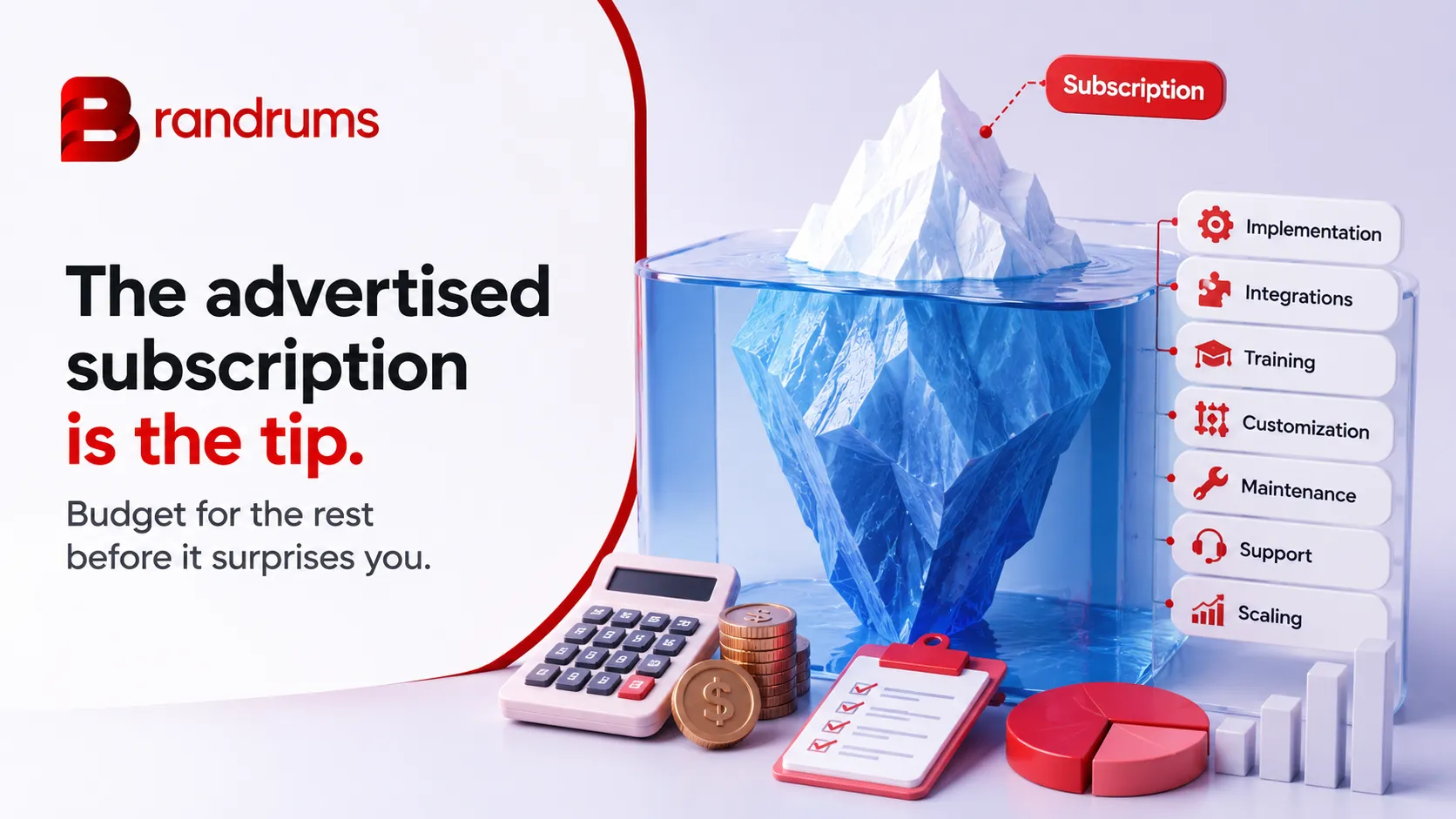
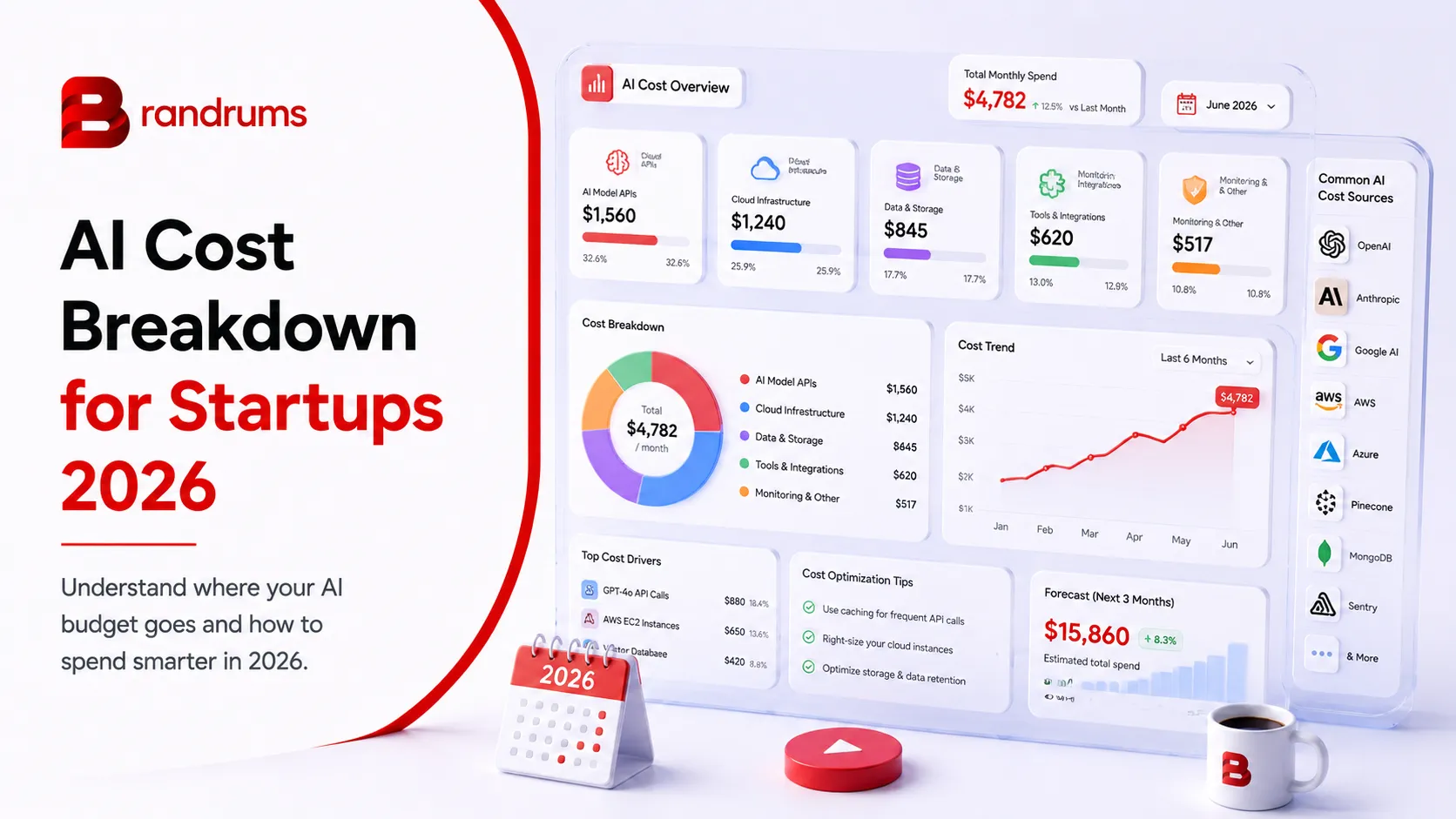
The sticker price is never the whole price. The advertised monthly fee is often only 20 to 40 percent of your true first-year cost. Here are the line items that quietly inflate AI budgets, so you can plan for them now instead of being surprised later.
The advertised subscription is the tip. Budget for the rest before it surprises you.
API usage charges. Some tools bill by the call or the token, so your cost grows with how much you use them. Great until it surprises you on a busy month.
Integration. Connecting tools to each other can run $500 to $5,000 if you need help wiring them up properly.
Training time. Budget 10 to 30 hours to learn each tool well enough to actually trust its output.
Data cleanup. AI is only as good as the data you feed it. Messy CRM records and scattered files cost you on the back end, because the AI produces worse results from worse inputs.
The productivity dip. Expect two to four weeks of slightly reduced output while your team adapts to a new tool. It is temporary, but it is real, and it belongs in your budget.
A Realistic 12-Month Budget Example
Let me put it all together for a typical small business with a handful of employees, growing into AI over a year.
Ramp up slowly. Pay for capability only once you have proven you need it.
Phase | What you are doing | Monthly AI spend |
|---|---|---|
Months 1-2 | Testing on free tiers, finding your real needs | $0 |
Months 3-5 | Starter stack: one assistant plus cheap specialists | $40-$60 |
Months 6-9 | Growth stack: automation, chatbot, CRM, content engine | $200-$400 |
Months 10-12 | Optimizing, cutting what is idle, scaling what works | $200-$500 |
The One Rule That Governs Every AI Budget
Whatever you spend, measure what it gives back. If a tool saves real hours or brings in real revenue, keep it and maybe spend more. If you cannot name what it has saved you within 60 days, cancel it. This is the entire discipline. AI is not expensive when it is tied to outcomes. It gets expensive when it quietly becomes a stack of subscriptions you forgot you were paying for. A majority of AI users report saving $500 to $2,000 a month from their tools, but those results depend heavily on implementation quality, not just which logos you picked. The businesses that win are the ones that treat every tool as a bet that has to prove itself.
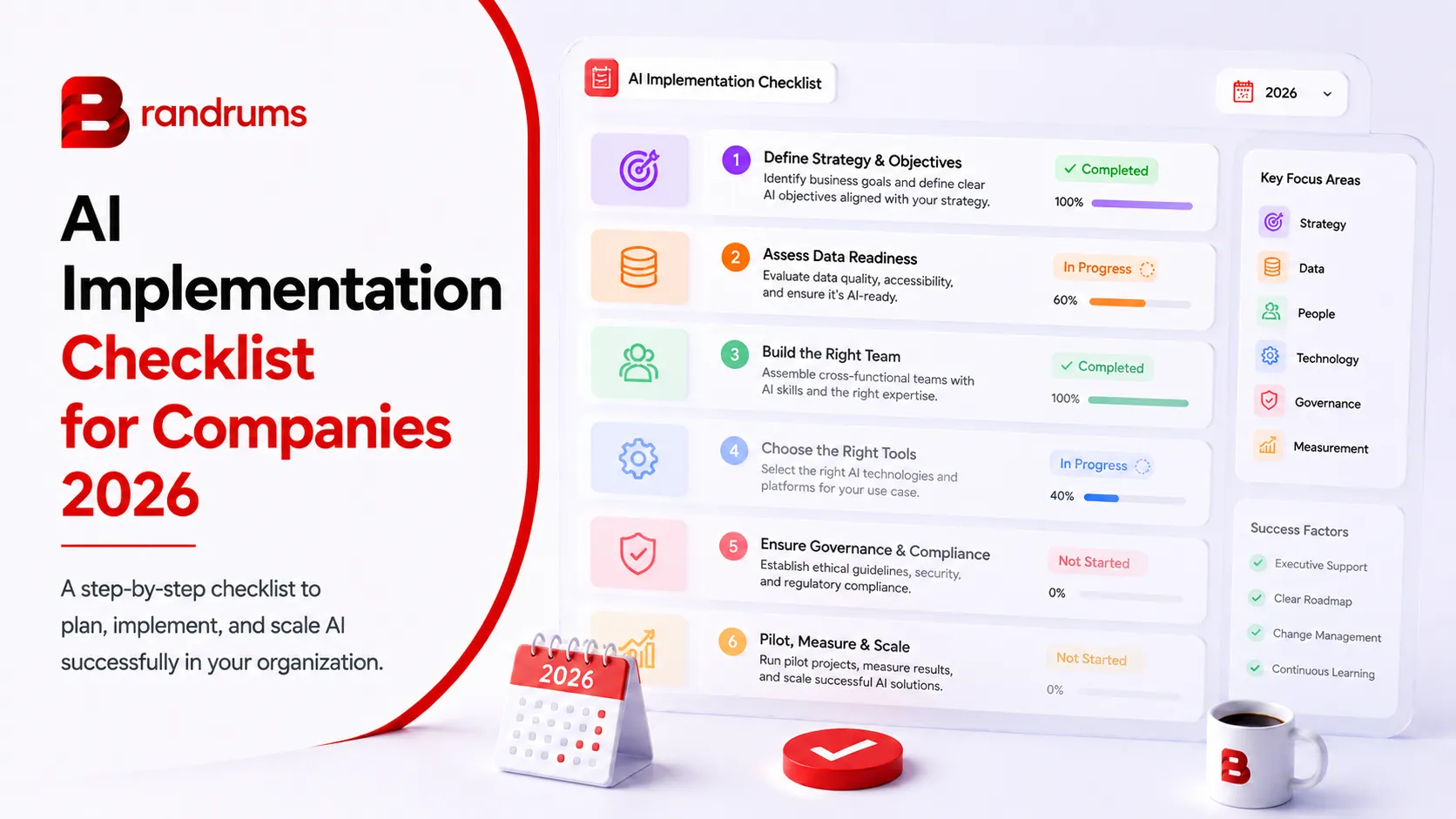
Before you add any AI tool, confirm
It maps to one specific, repeated task you already do
You can estimate the hours or dollars it should save
You have budgeted setup and training time, not just the subscription
You know how you will measure its impact within 60 days
You are not duplicating something a tool you already pay for can do
Frequently Asked Questions
How much should a small business budget for AI in 2026?
Most small businesses spend between $50 and $500 per month on AI tools in 2026. A bare-bones setup runs $30 to $50, while a full growth stack covering content, sales, support, and automation lands around $200 to $500. Custom AI builds from an agency are separate and typically run $10,000 to $50,000 as a one-time project.
Can a small business use AI for free?
Yes. In 2026 the free tiers of ChatGPT and Claude, HubSpot free CRM, Mailchimp free up to 500 contacts, and Google Search Console let a solo founder run a useful AI stack for months at no cost. Free tools cap usage and slow down at peak times, but they are a no-risk way to test whether AI fits your business before paying.
What are the hidden costs of AI tools?
The advertised subscription is often only 20 to 40 percent of the true first-year cost. Hidden costs include setup and training time (10 to 30 hours per tool), integration ($500 to $5,000 to connect tools), usage-based API charges that grow with volume, and data cleanup so the AI has good information to work with.
How do I know if an AI tool is worth the money?
Tie every tool to a measurable outcome. Calculate first-year cost (monthly fee times 12, plus setup and training hours) and divide by expected monthly savings to find your break-even. Under six months on an important task is a clear win. If you cannot name what a tool saved you within 60 days, cancel it.
Is custom AI worth it for a small business?
Usually not in year one. Most small business problems are solved with off-the-shelf tools for $20 to $100 per user per month. Custom AI makes sense once you have genuinely outgrown pre-built tools and have a specific process that no product on the market handles. At that point an agency build at $10,000 to $50,000 is lower-risk than hiring an in-house specialist.
Ready to build the AI setup that fits your business?
Whether you are a solo founder testing the waters or a growing team scaling into serious automation, we help clients pick the lightest AI stack that earns its keep. Same discipline we apply through website development, web application development, SaaS development, and digital marketing retainers. Tell us what you are trying to automate and we will recommend a setup. Or check our pricing options if you are scoping engineering support alongside the tooling.
Tags
About the Author

Daniel Brooks
Daniel covers web development, artificial intelligence, product design, and the technology decisions that help modern businesses grow.