TL;DR
In 2026, a credible custom business website in the USA runs roughly $8,000 to $30,000, with custom ecommerce and SaaS marketing builds reaching $50,000 and beyond.
"Affordable" in the USA does not mean cheapest; it means transparent scope, predictable maintenance, and code you actually own.
Offshore can save 40-60% on hourly rates, but timezone, QA, and rework often erase 15-30% of those savings.
Plan for hidden costs: hosting, premium plugins, SSL renewals, security monitoring, and content migration can add $1,500-$6,000 a year.
Vet agencies on case studies, contract clarity, code ownership, and post-launch support, not just the lowest hourly rate.
Every founder and marketing lead we talk to asks the same first question: what should a real, custom website actually cost in the USA right now? The honest answer is that pricing in 2026 has split into clear tiers, and the gap between "cheap" and "affordable but solid" is wider than ever. This guide lays out the real numbers, the hidden line items, and how to spot a vendor who will not bill you twice for the same work. If you want our broader service menu while you read, our website development services page outlines what a typical engagement covers.
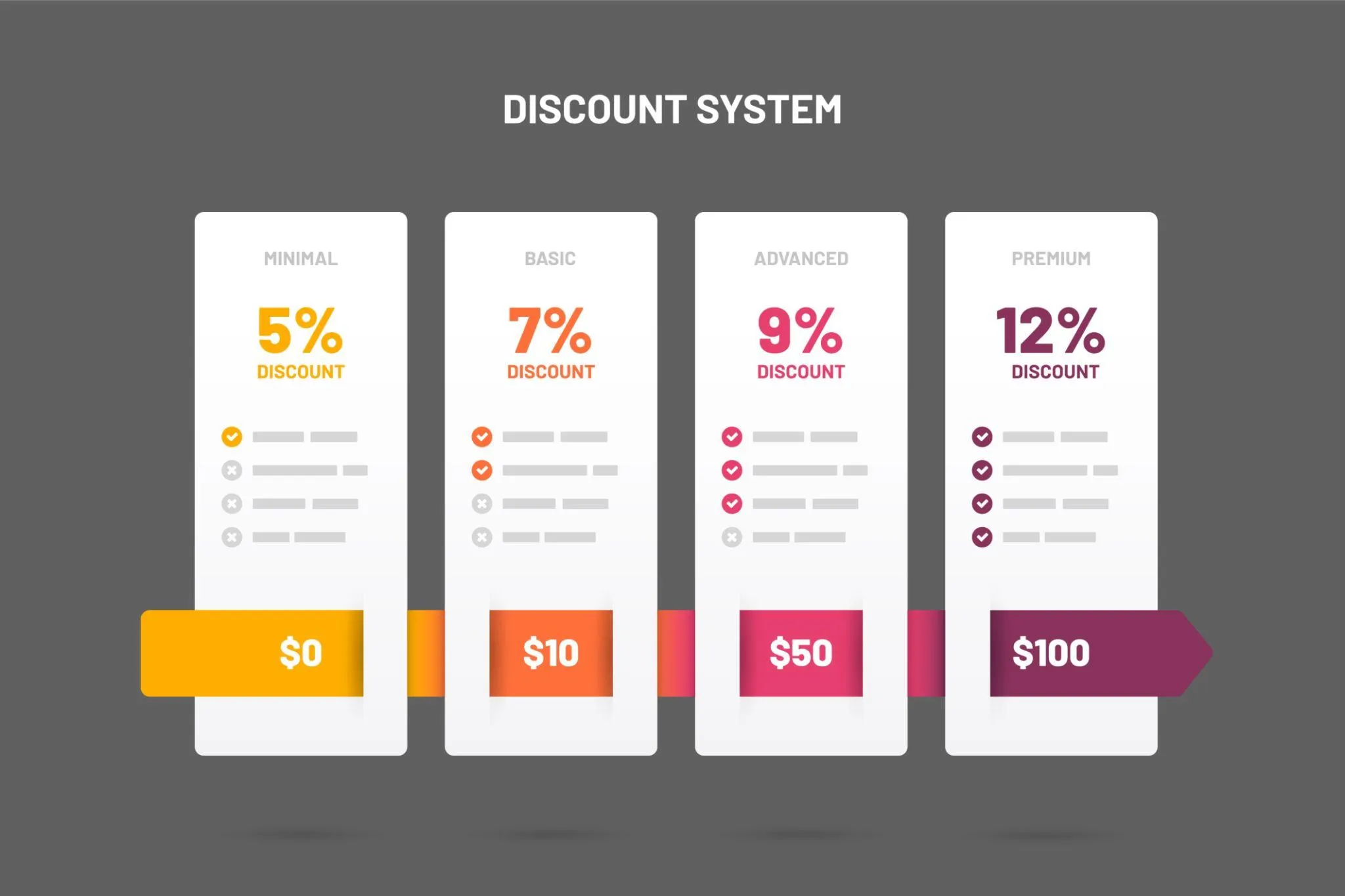
A pricing tier diagram showing brochure, business, ecommerce, and SaaS website ranges
What "Affordable" Actually Means in the USA Market
Affordable in 2026 is not the same as the lowest invoice. Per DigitalApplied's 2026 pricing data, the average USA agency project lands near $66,500 with a roughly nine month timeline, while small business sites typically sit between $5,000 and $15,000. Affordable, then, means you get senior strategy, accessible code, and a maintenance plan without paying enterprise overhead. It is the middle band where a US-based team can still deliver craft work without padding the bill with junior hours.
For SMBs and early-stage startups, the right benchmark is value per dollar over a 24-month window, not the sticker price on day one. A $7,000 template build that needs a $20,000 rebuild in 18 months is not affordable. A $14,000 custom build that scales for three years is. If you want a transparent baseline before any conversation, our pricing page outlines tier-based starting points so you are not negotiating in the dark.
Real 2026 Price Ranges by Project Type
Industry data converges on similar bands. According to Shopify's 2026 ecommerce cost guide, professional Shopify development starts near $3,000 for theme-based builds and climbs past $40,000 for custom design and advanced integrations. Larger custom ecommerce work can land between $45,000 and $250,000 once B2B logic, ERPs, and AI personalization enter scope. Brochure sites at the low end remain achievable for under $10,000 when the scope is genuinely small.
Project Type | Typical USA Range (2026) | Timeline | What's Included |
|---|---|---|---|
Brochure (5-8 pages) | $3,500 - $9,000 | 3-5 weeks | Custom design, responsive build, basic SEO, contact form |
Business / Service Site | $8,000 - $25,000 | 6-10 weeks | CMS, blog, analytics, lead capture, on-page SEO, light integrations |
Custom CMS / WordPress | $12,000 - $40,000 | 8-14 weeks | Custom post types, multi-author flows, design system, performance tuning |
Ecommerce (Shopify or custom) | $12,000 - $80,000 | 10-18 weeks | Catalog setup, payments, tax, shipping, subscriptions, CRO basics |
SaaS Marketing Site | $20,000 - $75,000 | 10-16 weeks | Component library, CMS, A/B test rigging, integrations with product |
If your project sits closer to commerce, our ecommerce solutions team has built across both Shopify and custom stacks. For content-heavy or editorially driven sites, our WordPress development practice handles custom block builds and headless setups. For deeper UX direction on conversion-led pages, the web design service integrates with the build from day one.
What's Actually Included at Each Tier
The price tells you very little until you read what is bundled. At the brochure tier, expect a designer, a developer, and a project manager sharing hours; you usually get a single round of revisions per page and a basic CMS like WordPress or a static stack. At the business tier, you should see UX wireframes, a small design system, on-page SEO, schema markup, and analytics setup. At the custom ecommerce and SaaS tiers, the scope expands to user research, conversion strategy, accessibility audits, and integrations with CRMs, ESPs, and payment processors.
A pattern we see in 2026: serious agencies bake in a discovery phase rather than treating it as a paid add-on. If you are evaluating an early-stage product, our notes in the designing a startup app guide apply equally to a SaaS marketing site, because both depend on the same lean discovery loop. You can also browse our shipped work on the portfolio to see how scope maps to deliverables.
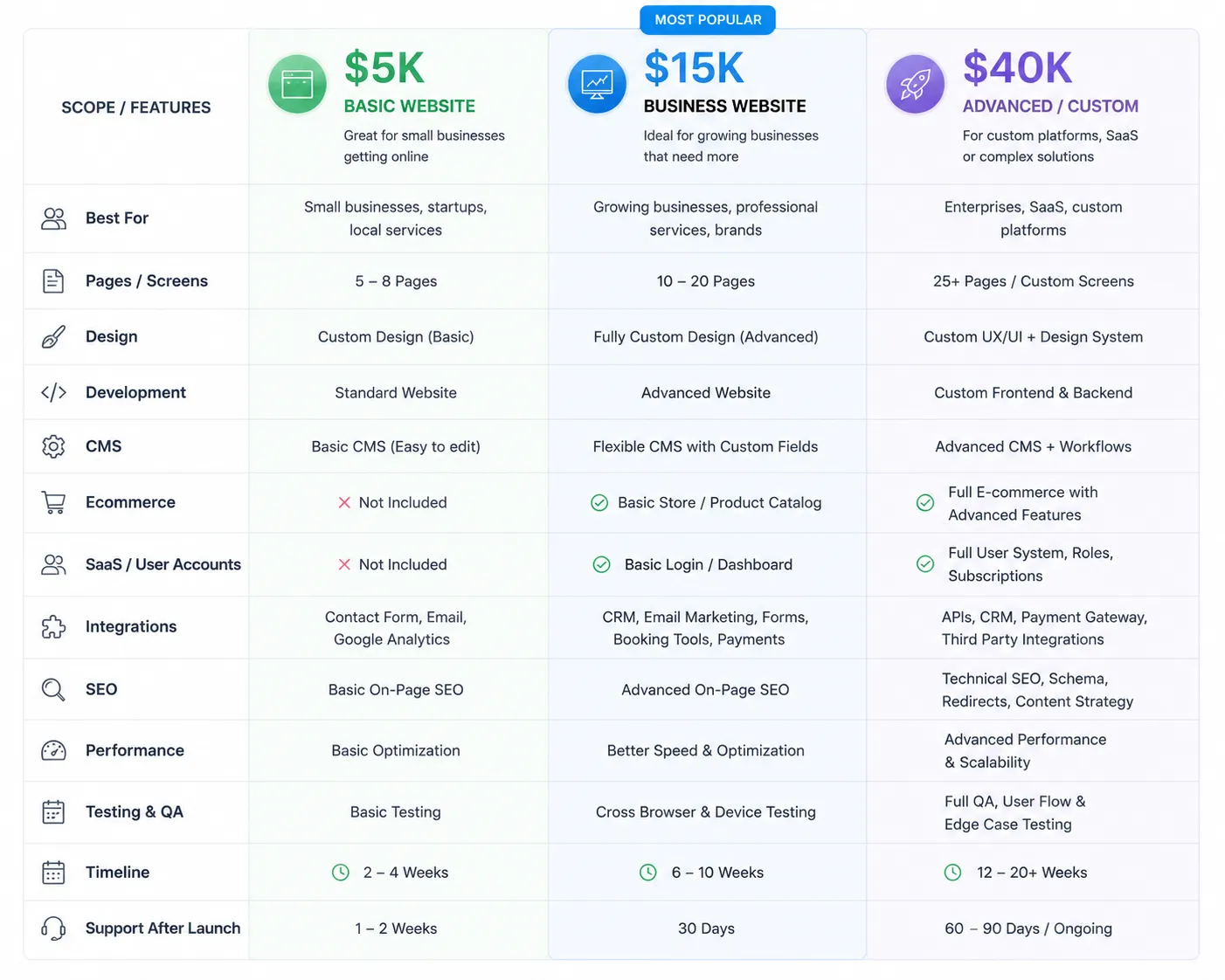
A sample scope table contrasting what is included at $5K, $15K, and $40K tiers
Hidden Costs to Budget For
The proposal almost never tells the whole story. Per Gravitate's 2026 maintenance cost guide, most businesses spend between $500 and $2,500 a month on hosting, security, plugin licenses, and updates after launch. Managed WordPress hosting alone runs $25 to $75 a month, premium plugin licenses pile up to $300-$600 a year, and a malware remediation incident can cost $500-$2,000 if your site gets hit.
Other categories that quietly inflate budgets include content migration when you have hundreds of legacy posts, image licensing if your designer assumes you have a stock subscription, accessibility remediation if you are bound by ADA expectations, and DNS or email handoffs that surprise non-technical owners. Our full services overview bundles maintenance options so these line items are visible up front, and our digital marketing team often picks up the SEO and analytics tail so nothing falls between vendors.
Red Flags When Vetting USA Agencies and Freelancers
The fastest way to identify a risky vendor is to ask three questions: who owns the code, what is the change-order process, and what does month two of maintenance look like. If any answer is vague, walk away. Other red flags include flat-rate quotes with no scope document, portfolios full of identical template sites, no named project manager, and refusal to put performance or accessibility commitments in writing.
Healthy signs look the opposite: a written statement of work, a fixed discovery deliverable, references you can actually call, and a maintenance SLA. If your project also touches identity work, the same vetting logic in our guide to hiring a design team applies. Real shipped case studies matter more than awards; for example, see how we approached a regulated rebrand on the Tamreeni case study or a content-heavy launch on the Hard Shoulder case study.
In-House vs Agency vs Freelancer Trade-Offs
Each model fits a different stage. Freelancers are excellent for narrow scopes under $10,000 and clients who can self-manage. Agencies make sense when you need design, engineering, content, and SEO under one contract with a single PM. In-house is the right call once your roadmap is continuous and you have at least 20 hours a week of work for a year. Most US SMBs and seed-stage startups land on agency or hybrid models because they avoid hiring overhead while still getting senior thinking.
Cross-functional needs often tip the decision. If you also need a mobile companion, our mobile application service can run in parallel, and our breakdown of mobile app design cost uses the same tier logic as websites. For organizations that need brand and site to launch together, the branding team sequences identity ahead of the build so you are not reworking visuals during QA.
USA vs Offshore: When Each One Actually Wins
The hourly math is real. Per Developex's 2026 global rate benchmarks, senior US web developers charge $120-$200 an hour, while senior talent in Eastern Europe sits at $50-$80, Latin America at $45-$80, and India at $30-$45. That is a 3-5x spread on paper. In practice, total cost of ownership compresses the gap because of communication overhead, time zone lag, QA rework, and the cost of senior US oversight that most successful offshore engagements still buy.
Model | Typical Senior Hourly | Best For | Watch-Outs |
|---|---|---|---|
USA Agency | $120 - $200 | Regulated industries, strategy-heavy work, US-only stakeholders | Higher sticker price, smaller teams |
Eastern Europe | $50 - $80 | Engineering-heavy builds with mature specs | Limited timezone overlap with US West Coast |
Latin America | $45 - $80 | US timezone overlap, agile collaboration | Senior bench is thinner in niche stacks |
India | $30 - $45 | Volume work, long-running maintenance pods | Async-only days, requires strong PM on US side |
US Freelancer | $75 - $150 | Narrow scopes, founders who can self-manage | Bus factor of one, limited bandwidth |
Offshore wins when your spec is locked, your PM is senior, and the project is more engineering than strategy. USA agencies win when scope is fluid, stakeholders are non-technical, or you need integrated brand, content, and SEO. We compare these dynamics for mobile work in our affordable USA app development guide, and the same logic applies to websites.
How Brandrums Approaches Affordable Custom Builds
Our model is hybrid by design. US-based strategy, design direction, and engineering leadership sit at the front of every project, with execution pods that scale up or down based on scope. This keeps total cost in the affordable band, $8,000 to $40,000 for most SMB and startup engagements, while keeping a single accountable team on the contract. We publish fixed-scope discovery deliverables, name your PM in the SOW, and hand over a documented codebase you own outright.
We also link the build to growth from day one. The digital marketing service and social media marketing service can pick up post-launch, and our creative copywriting team writes pages that convert rather than just describe. Industry-specific work is anchored by our ecommerce industry practice and fintech industry practice, where compliance and conversion both matter.
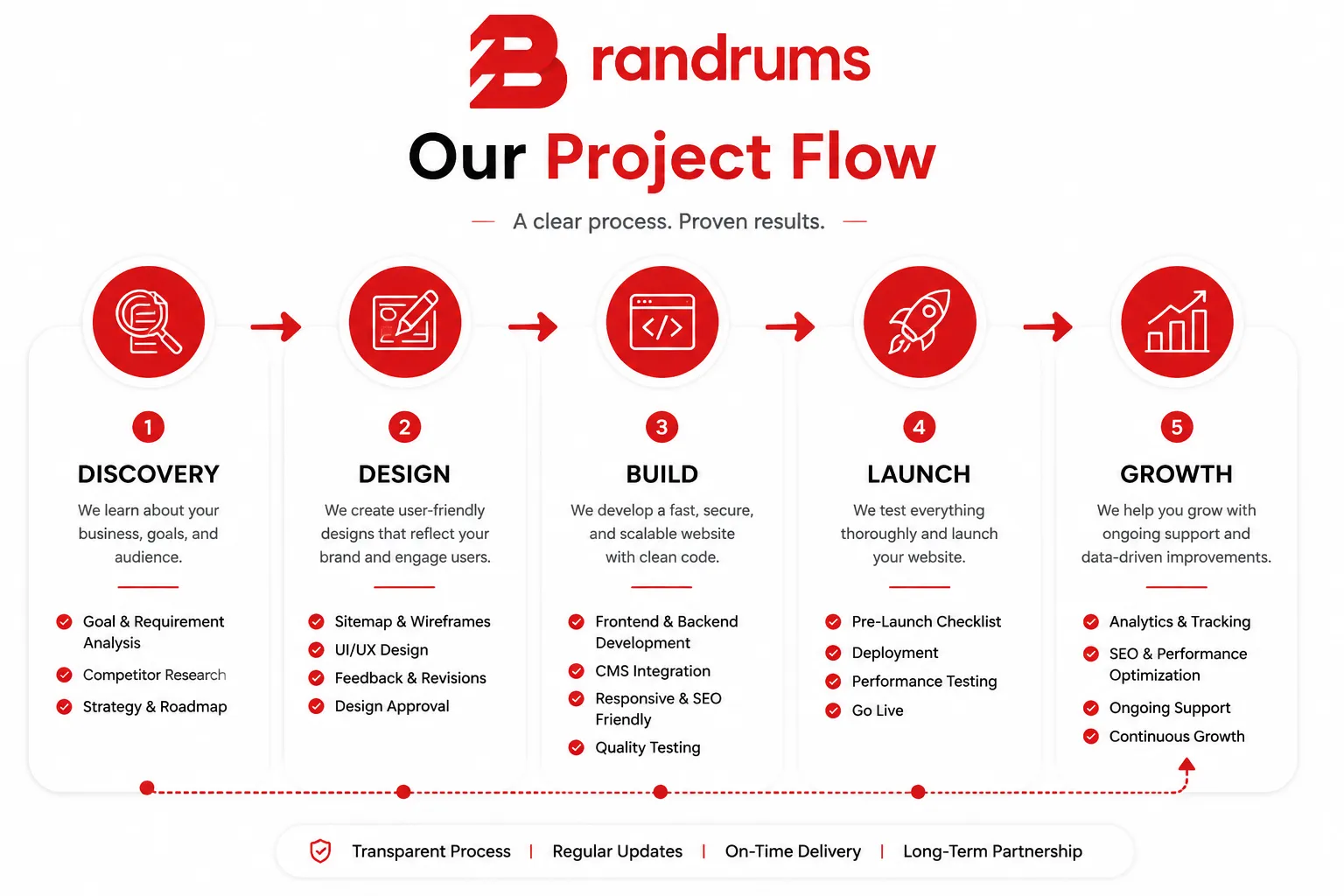
A simplified Brandrums project flow showing discovery, design, build, launch, and growth
Key takeaways
Affordable in the USA usually means $8,000 to $30,000 for a credible custom business site, scaling higher for commerce and SaaS.
Maintenance, hosting, plugins, and security add $500-$2,500 a month; budget for it from day one.
Offshore saves on hourly rates but rarely cuts total cost in half once QA and PM overhead are counted.
Code ownership, a named PM, and a written SOW separate serious vendors from risky ones.
Pair the build with content and SEO partners early so launch traffic does not stall.
FAQ
What is the minimum realistic budget for a custom USA website in 2026?
For a genuinely custom small business site with original design, a CMS, and SEO basics, budget at least $8,000-$10,000 with a US agency in 2026. Below that, you are almost always buying a templated build with light customization, which can work for very early stage businesses but rarely scales past the first year of growth without a rebuild.
Are offshore agencies a safe alternative to US developers?
They can be, when the project has a locked spec and senior in-house product or PM oversight on your side. Offshore typically reduces hourly cost 40-60%, but adds coordination overhead and QA cycles. For strategy-heavy work, regulated industries, or projects where scope evolves weekly, a USA-based team usually delivers a lower total cost of ownership.
How do I avoid hidden costs after launch?
Ask for a written maintenance plan before signing. It should cover hosting, SSL, plugin or framework updates, security monitoring, backups, and a monthly hour bank for content edits. Confirm that all premium licenses are in your name, not the agency's. Industry estimates suggest $500-$2,500 a month is a reasonable maintenance budget for a business site.
Should I build on WordPress, Shopify, or a custom stack?
WordPress remains the most affordable path for content-heavy sites with a strong plugin ecosystem. Shopify is the default for most SMB ecommerce because total cost of ownership beats custom under $250k in annual revenue. A fully custom stack like Next.js or Astro fits SaaS marketing sites and brands that need design and performance differentiation. Match the stack to traffic, team, and roadmap.
How long should a custom website project take?
Brochure sites ship in 3-5 weeks, business sites in 6-10 weeks, custom CMS and ecommerce builds in 8-14 weeks, and SaaS marketing sites in 10-16 weeks. Any vendor promising a custom $20,000 build in two weeks is almost certainly cutting QA, accessibility, or SEO. Realistic timelines also include a discovery phase before design begins.
Do I own the code and design when the project ends?
You should. Reputable USA agencies, including ours, transfer the full code repository, design files, and credentials at handover. If a vendor retains ownership of the codebase or holds licenses in their name, that is a red flag. Confirm ownership terms in the SOW before signing, and ask whether the agency uses any proprietary frameworks that would lock you in.
Ready to scope your project the honest way?
If you want a realistic estimate for your specific scope, our team will put numbers on the table before you commit. Start by reviewing the tier-based pricing page, then contact us with a short brief, your target launch window, and any reference sites. We will respond with a scoped proposal that names your team, your deliverables, and your post-launch options, without padding the bill.
Tags
About the Author

Daniel Brooks
Daniel covers web development, artificial intelligence, product design, and the technology decisions that help modern businesses grow.